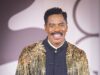

What do a bisexual feminist icon, a censored AIDS-era artist, a rock-and-roll pioneer, and a Parkland shooting survivor have in common? They all chose September 14 to make history. Seems like a pretty busy day in the queer calendar.
1934: Kate Millett Arrives (And She’s Not Here for Your Nonsense)
Kate Millett was born on September 14, 1934, in Saint Paul, Minnesota — and the world was never quite the same. She’d go on to write Sexual Politics (1970), the doctoral dissertation-turned-bestseller that basically detonated second-wave feminism and made the patriarchy very, very nervous.
Here’s the part mainstream history likes to skip: Millett came out as bisexual in 1970, the very same year her book dropped. She was at a Columbia University panel on sexual liberation when a woman in the audience asked her about her own sexuality, and instead of dodging the question like a properly socialized 1970s public intellectual, she just said it. Bisexual. Done. No press tour, no coming-out essay. Just truth, dropped casually like it was no big deal — because it shouldn’t be.
The feminist movement, of course, had opinions about this. Some radical lesbian feminists thought bisexuality was a cop-out. Millett didn’t care. She was too busy being the first American woman to earn a first-class honors degree from Oxford, co-founding CR One (the first lesbian-feminist consciousness-raising group — even though she identified as bi, because labels are for filing cabinets, not people), getting arrested at protests, and eventually marrying sculptor Fumio Yoshimura and, later, Sophie Keir. She once had to physically push away a drunk Oliver Reed on live British television. He tried to kiss her. She was not having it.
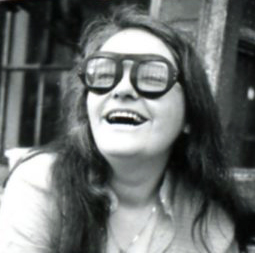
Millett died in 2017 in Paris at 82, having spent a lifetime refusing to be categorized by anyone, including herself. The Washington Post called her the “high priestess of second-wave feminism.” We’d call her the patron saint of “no, I don’t need to pick a side, thank you.”
1954: David Wojnarowicz Is Born (And Will Absolutely Make You Uncomfortable)
Exactly twenty years later — September 14, 1954 — David Michael Wojnarowicz was born in Red Bank, New Jersey. His childhood was, to put it charitably, a nightmare. His father, a merchant marine, physically abused him. His parents divorced bitterly. His father kidnapped the kids. They eventually found their mother through a Manhattan phone book — which feels like a detail from a novel you’d reject as too on-the-nose.
By his teens, Wojnarowicz was living on the streets of Times Square, working as a hustler to survive. He graduated from the High School of Music & Art (God loves a plot twist) and emerged in the late 1970s East Village art scene — a self-taught force of nature who worked in painting, photography, film, sculpture, music, and writing. He stenciled burning houses on the sides of buildings. He photographed himself as Rimbaud. He was in a band called 3 Teens Kill 4. He collaborated with Nan Goldin, Peter Hujar, and Kiki Smith. He didn’t dabble; he detonated.
Then AIDS happened.
After his mentor and lover Peter Hujar died of AIDS in 1987, Wojnarowicz moved into Hujar’s loft on 2nd Avenue, was diagnosed with HIV himself, and spent his last five years producing some of the most furious, viscerally political art of the era. He wrote two memoirs — Close to the Knives and Memories That Smell Like Gasoline — that read like someone carving their own headstone while they’re still breathing. He sued the American Family Association and won. He appeared in the documentary Silence = Death. He was, in every sense, an activist who happened to be an artist, or an artist who happened to be an activist — and the distinction stopped mattering.
His 1986-87 short film A Fire in My Belly — which includes a crucifix covered in ants — was pulled from a Smithsonian exhibition in 2010 after the Catholic League and several Republican congressmen complained. The Catholic League called it “hate speech.” An artist who spent his life documenting the government’s lethal indifference to dead gay men was, after his own death, censored again by his own government. The art world protested. Institutions re-screened the work. The Smithsonian’s secretary later admitted he “might have made the decision too quickly.” You think?
David Wojnarowicz died of AIDS on July 22, 1992. He was 37 years old. The only image of him available on Wikimedia Commons is a copyrighted photograph, so we’ll let his words do the work instead — but if you want to see his art, the Whitney held a major retrospective in 2018, and his work is in the collections of MoMA, the Art Institute of Chicago, and the Whitney. Go look. It will make you uncomfortable. That’s the point.
1955: Little Richard Walks Into a Studio and Changes Everything
September 14, 1955: Richard Penniman — a 22-year-old queer Black man from Macon, Georgia — walked into J&M Studios in New Orleans and recorded a song called “Tutti Frutti.” The original lyrics? Let’s say they were… anatomically specific. The phrase was “tutti frutti, good booty” before lyricist Dorothy LaBostrie sanitized it — over lunch, roughly one hour before the recording session — into “tutti frutti, aw rootie.” Rock and roll has always been about sex. It just needed someone to hold the clipboard so the producers would let it through the door.
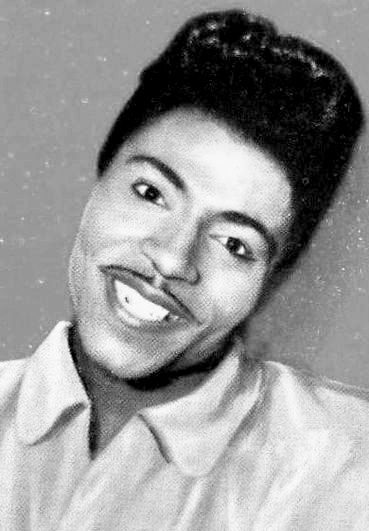
Little Richard’s relationship with his sexuality was, to put it mildly, complicated. He was queer and flamboyant and androgynous in a 1950s America that could barely handle Elvis’s hips, let alone a man in eyeliner and a pompadour. He was arrested, assaulted, and reckoned with his identity under a religious framework that alternated between condemnation and absolution. At various points in his life, he called himself gay, bisexual, “omnisexual,” and a former homosexual. He might not have been the most consistent spokesperson for his own identity, but he was the loudest and most undeniable one — a Black queer Southern kid from the Jim Crow South who strutted onto every stage like it owed him money.
What’s often missed is that without Little Richard, there’s no Prince, no Bowie, no Elton, no Freddie Mercury — and those artists knew it. “Tutti Frutti” was the first time anyone in mainstream American pop culture saw a man perform masculinity as a performance rather than a given. He was doing drag aesthetics before anyone called it drag aesthetics. He wore the makeup. He hit the high notes. He minced across the stage with a full band behind him, and the audience went absolutely insane. The establishment tried to take the sex out of his lyrics, the religion out of his body, and the queerness out of his public image. In the end, none of it stuck. “Tutti Frutti” endures, and so does he.
2021: Cameron Kasky Comes Out (And the Internet Goes, “Yeah, That Tracks”)
Fast forward sixty-six years to September 14, 2021, and Cameron Kasky — the Parkland shooting survivor who helped organize March For Our Lives and became one of the most visible teenage activists in American history — tweeted: “I don’t know exactly that ‘type’ of queer I am, and I’m finally OK with that.”
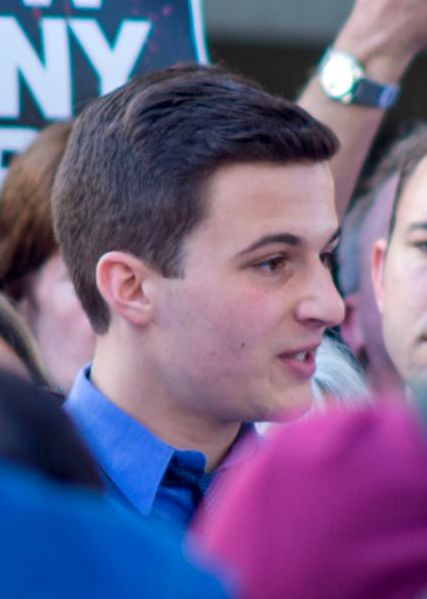
The response from the internet was, in a rare moment of consensus between the LGBTQ community and common sense, roughly: “Yeah, that tracks.” When someone has spent three years being publicly articulate, emotionally honest, and unapologetically themselves before the age of 20, the coming-out tends to feel less like a revelation and more like a formality.
In his coming-out interview with The Advocate, Kasky also had this to say about the mainstream gay establishment: “I wanted to be straight. White gay men have espoused ignorant views on white privilege and gender identity.” It’s the kind of honesty that makes PR people sweat and the rest of us nod. He was already a kid who had survived a mass shooting and turned his grief into national political action. The sexuality part was, by comparison, a lighter lift.
The best part of Kasky’s approach is the refusal to specify exactly where on the queer spectrum he falls. In a culture that wants every identity labeled, sorted, and monetized, “I’m queer and I don’t need to be more specific” is genuinely radical. Kate Millett, we suspect, would approve.
So: September 14, Then
One day. Four moments. A bisexual feminist scholar, a self-taught artist-activist who burned hot and died too young, a rock god with an identity more complex than any label could hold, and a teenager from Parkland who decided on a Tuesday that he was done hiding.
If there’s a throughline here, it’s that queerness — in all its messy, contradictory, increasingly visible forms — doesn’t wait for permission or convenience. It shows up when it shows up. On this day, September 14, it showed up four times. History rarely does you that solid.
Happy Sunday, queers.