

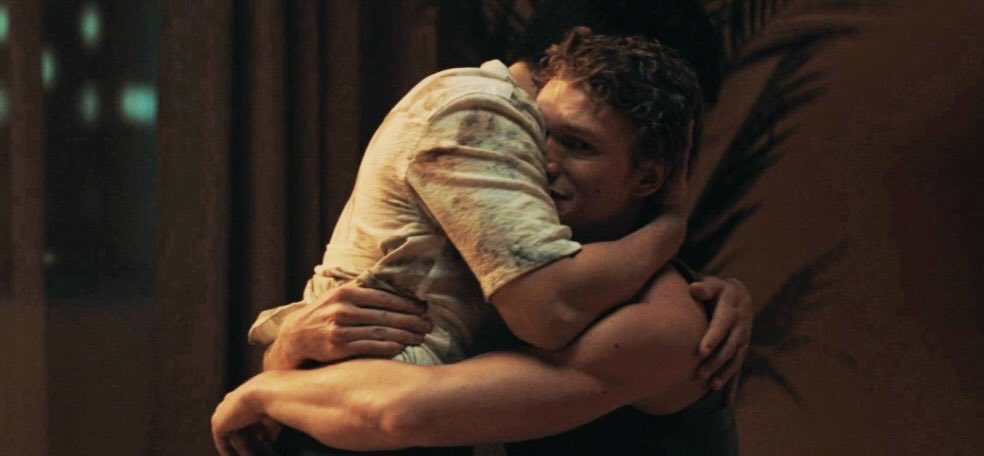
Heated Rivalry has ruined me. Or maybe it’s saved me? It’s hard to tell. No matter where I am, or what I’m doing, there’s a piece of that show running through my mind. All the while, I know how ridiculous that is. It’s just a tv show. They’re fictional characters. The real world isn’t anything like that. Still though, with the help of social media’s ubiquitous algorithms, it’s in front of me all the time.
This didn’t happen with Red, White & Royal Blue — handsome as the leads are. And it definitely didn’t happen with Mad Men or Game of Thrones, or any other endlessly addictive, expertly produced series.
Why this one? Why Heated Rivalry? Why does it matter so much that it drives such strong emotion?
Because we’re gay. Because we know what it’s like to not know how you’re going to face the world when everyone from your family to society-at-large doesn’t see things the way you do.
Because before we can figure anything out, we have to figure ourselves out. And when we do, we aren’t always happy with our discovery.
Because there’s a whole world out there conditioned to not support you.
Because you have a family you love, but will they love you when they find out. Sometimes, horribly, they don’t.
And because now you know that your life is going to be different from nearly everyone else you know.
Nobody around you will understand it, and you can’t explain it. You just know.
Every inch of Heated Rivalry –behind the sex and the sports and the smoothies– dredges up you what you’ve desperately tried to erase from your memory. For a lot of us, that wound we thought was healed is painfully raw. The longing to be understood, the longing to be loved, and the absolute desperate desire (and simultaneous panic) to confidently tell the world who you are. And all of that wrapped up in the unknown.
We watch Shane and Ilya navigate this path. Beautiful men, with successful careers, and fans everywhere — that could lose everything just by telling their truth. Let alone tell anyone that they’re also in love. How would it feel to get to the top of your field, only to have it unfairly taken away because of something you have no control over? How does it feel to know that despite your obvious ability, you’re successful only when you lie about who you are? These are real world problems gay men deal with every damn day.
Gay men have much higher rates of depression, anxiety, and drug abuse. The constant quest to be who you are is often met with resistance from those around you. Sometimes it’s subtle: an off-handed remark, a crass joke, or simply feeling uncomfortable around certain people. Where do you go from there? It’s not something you casually mention, and you don’t know if you’re ready, or they’re ready, to have that kind of discussion. The depression deepens. The anxiety mounts. And you look for something to wipe away that pain.
Sometimes you use sex. The physical act of being with another man feels right. At some subconscious level you can let yourself go and just be in the moment. You pretend (or hope) the intimacy is a sign of love and approval. Subconsciously, it is. You seek it out more and more because it doesn’t just feel good, but while it’s happening the pain and fear go away — just like Shane and Ilya.
Don’t worry though, you’ll feel empty again soon enough. So you go back for more. Or you find drugs to simply numb yourself. And the cycle repeats itself ’til you don’t think there’s any alternative.
The characters in Heated Rivalry feel all of this. Every gay man has a point in time they don’t want to revisit. It’s just too hard. The pain and anguish is buried beneath years of growth, maturity, and probably therapy. But watching Shane and Ilya, your band-aid gets ripped off. Those terrible feelings, that long-buried pain, comes rushing back like a tidal wave.
This time though, finally, instead of driving you deeper into depression, it becomes cathartic. As you watch Heated Rivalry, you’re healed by knowing and seeing and feeling these characters go through it. You’ve become so connected because you know how the story ends. You’ve lived it. You’re watching your own feelings and emotions play out on the screen.
A lot of those feelings get transferred to the actors. We want to know that they too had these experiences — that this isn’t “just” acting. Somehow, it devalues our emotions, and our personal struggle, if they didn’t actually live these feelings. The fact that someone without that background, without dealing with the struggle, can just imitate what it’s like — that trivializes everything we’re feeling. We want to see our own reflection in the story, but knowing the actors are merely acting the part makes it feel less authentic, less visceral. And that lack of authenticity makes you feel hurt. Now they’re not living it, they’re just acting it out. Your reality is shattered.
But now, you want those feelings again. You want to rejoice with Shane and Ilya, Scott and Kip, because you know what it feels like when you’re finally seen for who you are. So you keep looking for more and more. You’re drawn to anything that comes across your screen. While you know a lot of it is total bullshit, it still helps that emotional side of you grieve or celebrate or simply feel things.
So now we wait desperately… ’til the next book, the next series, ’til the next painful and emotional roller coaster we don’t want to avoid.
Related reading
- Potential ‘Heated Rivalry’ Special Episode Before Season 2
- Connor Storrie & Hudson Williams to Carry Olympic Torch
- I’m Coming to the Cottage











[…] Why Heated Rivalry? […]
[…] Why Heated Rivalry? […]
[…] Why Heated Rivalry? […]
[…] Why Heated Rivalry? […]