



Let’s get one thing straight (so to speak): Kit Connor never asked to be the face of bisexual representation in mainstream media. He was a 17-year-old kid who responded to an open casting call for a Netflix show, and then the internet — in its infinite, unhinged wisdom — decided his sexuality was a matter of urgent public interest. What followed was a coming-out story that was less “inspiring celebrity moment” and more “the internet forced a teenager to disclose his private life, and somehow he emerged from it as the most composed 22-year-old in show business.”
Now, in July 2026, Connor is closing out the Heartstopper era with Heartstopper Forever, the Netflix film that wraps up the beloved queer teen saga. And in the process, he’s become something genuinely rare: a bisexual leading man who actually talks about it, lives it, and doesn’t treat his sexuality like a press release.
The Accidental Icon
When Heartstopper premiered in 2022, it was an instant phenomenon. Based on Alice Oseman’s graphic novel series, the show follows Nick Nelson — a rugby-playing, effortlessly charming teenager who falls for his classmate Charlie Spring (Joe Locke) and realizes he’s bisexual along the way. The show was a cultural earthquake: tender, earnest, and deeply needed at a time when queer teen stories were still mostly tragic or invisible.
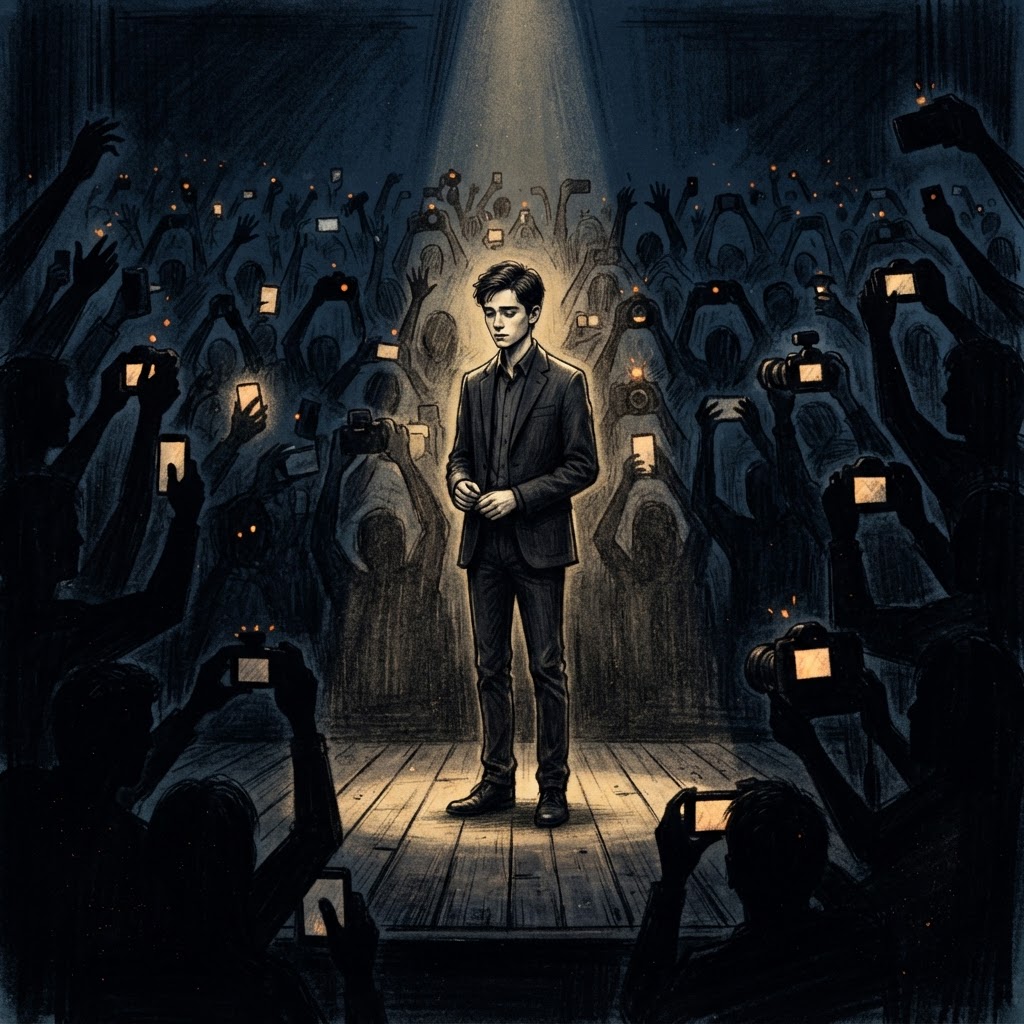
But the show’s success came with an ugly sideshow. Internet commentators — including, shamefully, parts of the queer community — decided that Connor, as a straight-presenting actor playing a bisexual character, owed the public a clarification of his own sexuality. The discourse was toxic, invasive, and relentless. Connor was pressured into coming out as bisexual on Twitter in 2022, later describing it as a situation where he felt he had no choice.
Let’s be clear about what happened: a teenager was bullied into disclosing his sexuality by strangers on the internet. That’s not representation. That’s a digital mugging. And the fact that Connor emerged from it with grace, humor, and his career intact says more about him than it does about the culture that pushed him there.
Forced Out, But Never Out of Control
What makes Connor’s story compelling isn’t just the unfortunate circumstances of his coming out. It’s what he did afterward. Instead of retreating, becoming a cautionary tale, or letting the narrative define him, Connor simply… kept working. And kept being himself.
He took on a role in Elton John’s biopic Rocketman (playing a young Elton — a queer music icon, naturally). He starred in His Dark Materials. He continued to advocate for the importance of queer stories without turning his sexuality into his entire personality, which is a line many public figures struggle to walk.
In interviews, Connor has been refreshingly honest about the experience. He doesn’t sugarcoat the pressure he faced, but he also doesn’t wallow in it. There’s a maturity to his perspective that feels earned rather than performed. He talks about bisexuality with the same casual matter-of-factness that straight actors talk about being straight — which, in an industry that still treats bisexuality as either a phase or a marketing strategy, is quietly revolutionary.

Heartstopper Forever: The Last Chapter
Heartstopper Forever, released on Netflix on July 14, 2026, is the film that closes the book on Nick and Charlie’s story. The movie follows the couple as they face their biggest challenge yet: going long distance as Nick heads to university while Charlie stays behind to finish school.
What’s notable about the film is how much it respects its characters — and its audience. The film doesn’t shy away from the harder stuff: eating disorders, mental health struggles, alcohol dependency, family dynamics. But it also refuses to be a tragedy. Nick and Charlie are, as Connor puts it, “queer and incredibly happy about it, living their lives in the way they want to.”
Connor and Locke both served as producers on the film, giving them genuine creative input rather than the ceremonial producer credit that’s usually handed to actors as a negotiation trophy. Locke joked that “a lot of the time people are just handed producer credits, but we actually put some effort in and took it seriously.” The result is a film that feels like it was made by people who actually care about the characters — because it was.
Netflix has confirmed that Heartstopper Forever will be available in several territories where homosexuality is criminalized. That’s not a marketing decision. That’s a lifeline. And Connor has been vocal about why that matters: “Making a show or film like Heartstopper will forever be important, wherever we are in the world and whatever the powers that be are doing.”
The Bisexual Leading Man Problem
Here’s the uncomfortable truth: Hollywood still doesn’t know what to do with bisexual men. Bisexual women get the male-gaze treatment — fetishized, titillating, easily dismissed. Bisexual men get something worse: erasure. They’re treated as either gay men in denial or straight men looking for attention. The “bi-now-gay-later” joke is still alive and well in casting offices and writers’ rooms.
Kit Connor is one of the few actors working today who occupies this space publicly. He’s not playing a bisexual character as a gimmick. He’s not treating his own bisexuality as a footnote. And he’s doing it in a mainstream Netflix production that millions of people are watching. The ripple effect of that kind of visibility — for bi guys who never see themselves reflected anywhere — is hard to overstate.
The industry is slowly catching up. More shows are featuring bisexual male characters who aren’t cheats, villains, or confusion arcs. But Connor is one of the people who made that shift possible, simply by existing on screen as Nick Nelson and refusing to let the discourse diminish him.
What Comes Next
Connor has been characteristically understated about his post-Heartstopper plans. He’s 22, he’s been working since childhood, and he’s earned the right to be selective. What’s clear is that he’s not interested in being typecast as “the queer teen actor” — a trap that has swallowed plenty of talented young performers before him.
“I value Joe as a friend, if we work together again that’s great, but he’s a great actor and I love watching his work,” he said of his co-star. There’s a warmth there that feels genuine, not rehearsed — the bond of two people who went through something intense and unusual together and came out the other side still liking each other.
Whether Connor’s next chapter is blockbusters, indie films, or something unexpected, he’s already accomplished something that most actors never will: he’s played a role that genuinely changed how people see themselves. Not through awards campaigns or strategic activism, but through the simple, radical act of playing a bisexual kid falling in love — and being good enough at it that a generation of bi guys watched and thought, that’s me.
The Verdict: Why Kit Connor Matters
Kit Connor’s career is still in its early chapters, but his impact is already written. He represents a new kind of queer celebrity — one who didn’t choose to be a symbol, but who stepped up anyway when the moment demanded it. He was forced out before he was ready, and instead of letting that define him, he turned it into a career built on integrity, talent, and a refusal to perform his identity for anyone’s comfort.
In a culture that still struggles to see bisexual men as real, Kit Connor is the proof. Not because he gives speeches about it, but because he lives it, works, and lets the work speak. That’s not activism. That’s just being yourself in a world that would prefer you to pick a side.
He never picked a side. And that’s exactly why he matters.
Related reading
- Top 10 Coming Out Scenes
- Real Life Heated Rivalry Stars Talk Coming Out to Their Family and Teammates
- Peppermint Is the Sweetest Force Broadway Never Saw Coming










[…] The Reluctant Heartthrob: Kit Connor […]