
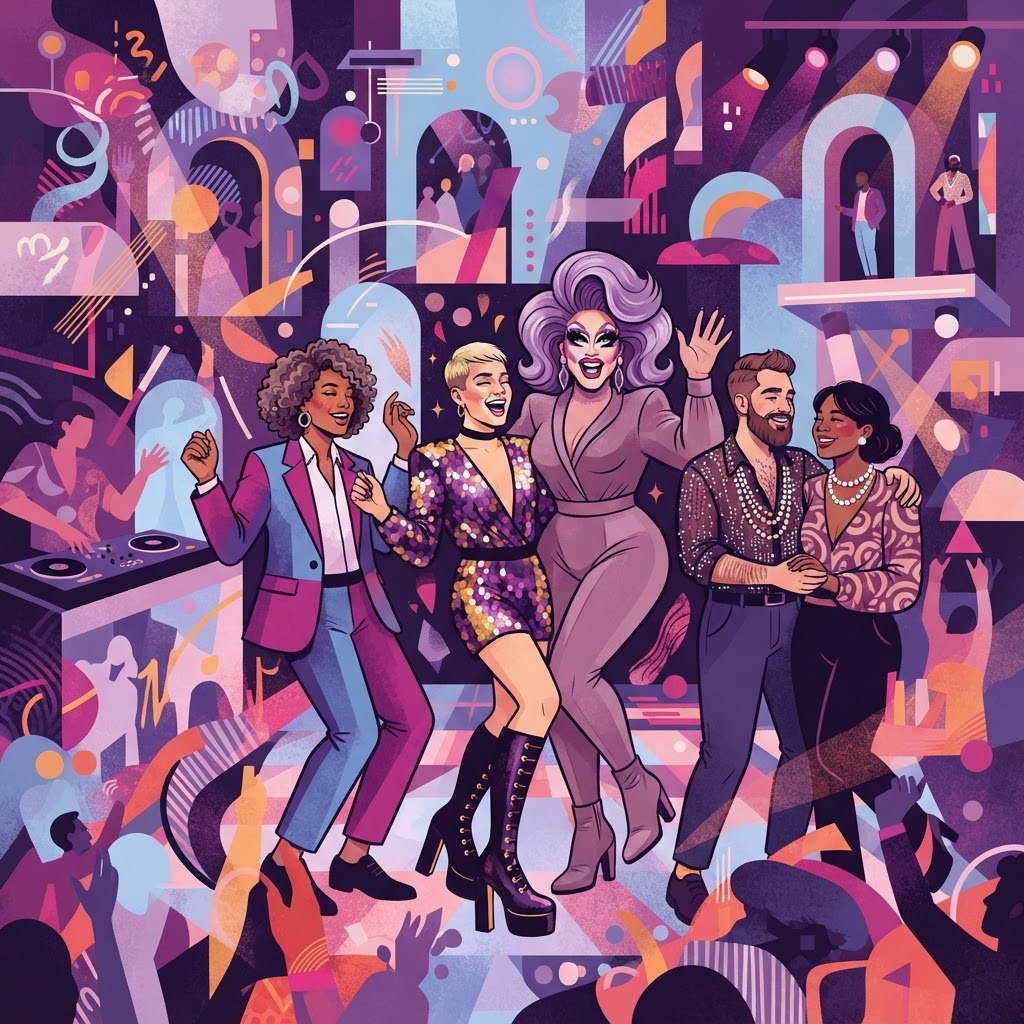
A field guide to the trends, shifts, and deeply specific obsessions defining queer life this year — with opinions.
Culture moves fast. Gay culture moves faster, and with considerably more attitude. One minute we’re all watching the same prestige drama, the next minute everyone’s obsessed with something called “gooning” and you’re too embarrassed to Google it at work.
So here’s your cheat sheet for what’s actually shaping gay culture in 2026 — the good, the questionable, and the things that would have been unimaginable five years ago but now somehow feel inevitable.
1. Pups Went Mainstream (Yes, Those Pups)
Remember when puppy play was a niche thing you’d only see at Folsom or in a very specific corner of Twitter? Those days are over. Pups are everywhere now.
Queer pup handlers and pups themselves have been showing up in mainstream media — from underground competitions going viral on TikTok to openly queer performers incorporating pup aesthetics into their stage shows. Even Republicans — the same people who think two men holding hands is a threat to Western civilization — are accidentally retweeting pup content from Pride events. We’ve somehow arrived at a place where the right wing accidentally made puppy play go viral, and honestly? Good for them. Welcome to the party, guys. The water bowl’s over there.
The broader takeaway: kink subcultures keep bleeding into the mainstream, but in 2026 it’s happening with less pearl-clutching and more “wait, this is kind of fun.” The pups won. Act surprised.
2. The Year of the Femboy
If 2024 was the year of the lesbian, 2026 is shaping up to be the year of the femboy. Femboys were the second most-searched category on PornhubGay in 2025. They’ve been dominating TikTok For You pages, infuriating the alt-right, and generally serving the public a masterclass in gender fluidity that most of the culture wasn’t ready for and desperately needed.
And let’s be honest: femboys have been carrying queer internet culture on their backs for a while now. It’s about time they got their flowers — or their thigh-highs, whichever they prefer.
3. Sniffies Is Having a Moment
Grindr used to be the only game in town. Not anymore. Sniffies — the map-based cruising platform that feels like Google Maps had a baby with a bathhouse — has crossed over from underground curiosity to cultural object. The New Yorker wrote about it. The New Yorker. The same publication that reviews fiction about upper-crust Connecticut dramas is now writing essays about a cruising app.
Meanwhile, Grindr is still there, doing its thing — the endless grid, the tap economy, the guy who messages “hey” and then never responds. But the landscape has shifted. Archer, Motto, and a wave of newer apps are building around what they think Grindr gets wrong. Whether that’s a better product or just a better marketing pitch depends on who you ask.
The point is: gay dating and hooking up is fragmenting. There’s no longer one default. And honestly, that’s healthier than a monopoly on desire.
4. Heartstopper Forever and the Queer YA Machine
Netflix released Heartstopper Forever in July 2026 — the feature film that closes out the beloved series — and it feels like the end of an era. Nick and Charlie, the teen couple that made a generation believe in soft, earnest queer love, are heading off to university and into adulthood.
What’s remarkable isn’t just that the show existed. It’s that it spawned an entire ecosystem: Young Royals, Sex Education, Heartbreak High, and a wave of queer YA content that actually treats LGBTQ+ teens like people with interiority, not PSA vehicles. The bar was on the floor, and somehow the industry tripped over it for years before finally clearing it.
Heartstopper Forever is the capstone on that wave. The question now: what comes next? Does queer YA grow up with its audience, or does it stay forever sweet and 15?
5. Queer Political Power Comes of Age
Sarah McBride made history as the first out transgender member of Congress. Danica Roem blazed the trail before her. And across the country, LGBTQ+ candidates are winning races at every level — from city councils to state legislatures to federal office.
This is the Obama-era, hope-and-change, “maybe politics can occasionally be good actually” energy that queer people haven’t felt in a while. After years of fighting — over trans rights, over drag bans, over the right to simply exist in public — seeing out LGBTQ+ politicians governing and winning feels like a breath of fresh air. Or at least a brief window where you can exhale.
Is it naive to get optimistic? Maybe. Is it deserved? Also maybe. Let queers have this one. The discourse will resume shortly.
6. Jinkx Monsoon’s World Domination
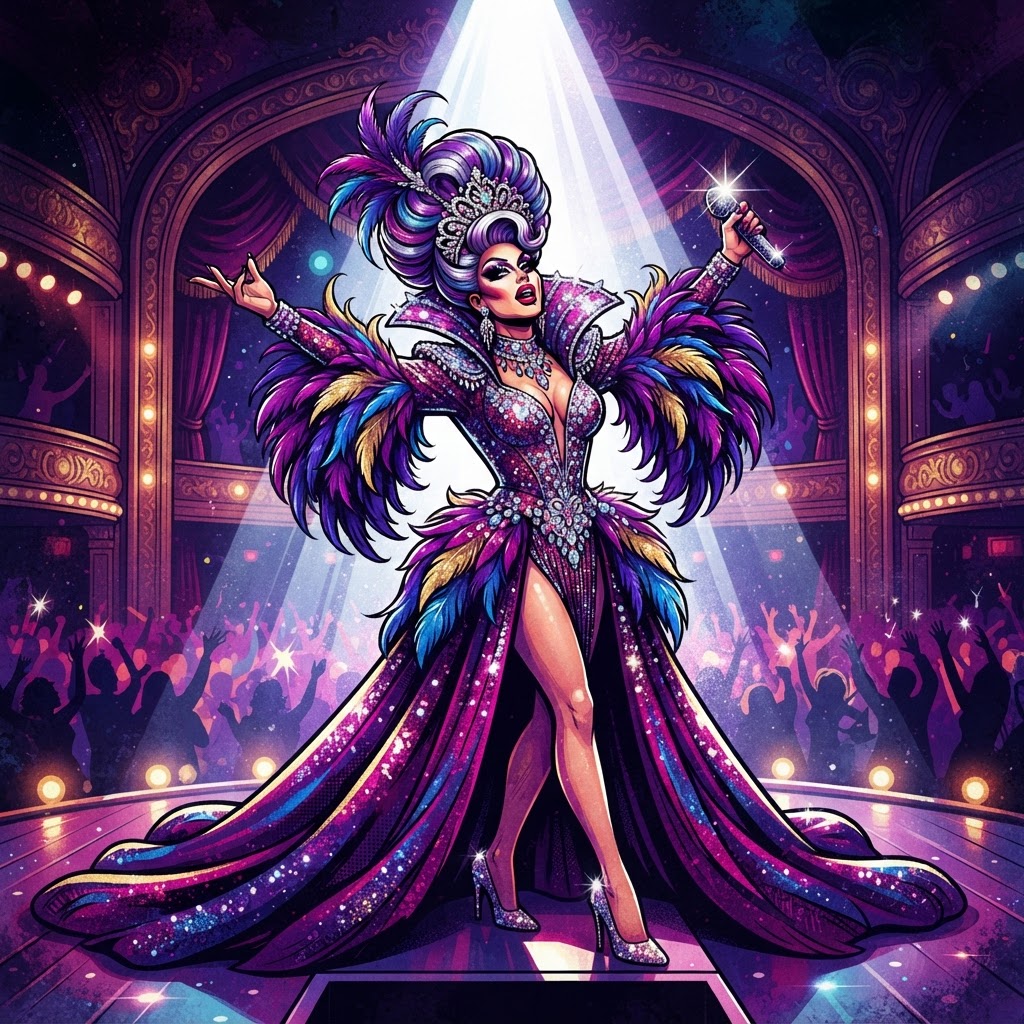
Jinkx Monsoon — the first queen to win RuPaul’s Drag Race twice — has been on an absolute tear. Her run in Oh! Mary on Broadway was the kind of performance that makes theater critics use words like “tour de force” without irony. Her star is rising in a way that feels less like a drag career and more like a full cultural takeover.
Drag has been mainstream for a while now, but 2026 feels like the year it stopped needing the “mainstream” label entirely. Jinkx is just a performer. A wildly talented one. The fact that she’s a drag queen is almost secondary — except that it’s not, because the drag sensibility is exactly what makes her work so electric.
The silver screen is apparently calling. Don’t be surprised if she’s in a Christopher Nolan movie by 2028. We’re only half joking.
7. Queer Fashion Grew Up (But Also Got Weirder, in a Good Way)
Gender-fluid fashion is no longer a trend piece — it’s a market expected to hit $3.35 billion in 2026. But the interesting part isn’t the number. It’s the aesthetic.
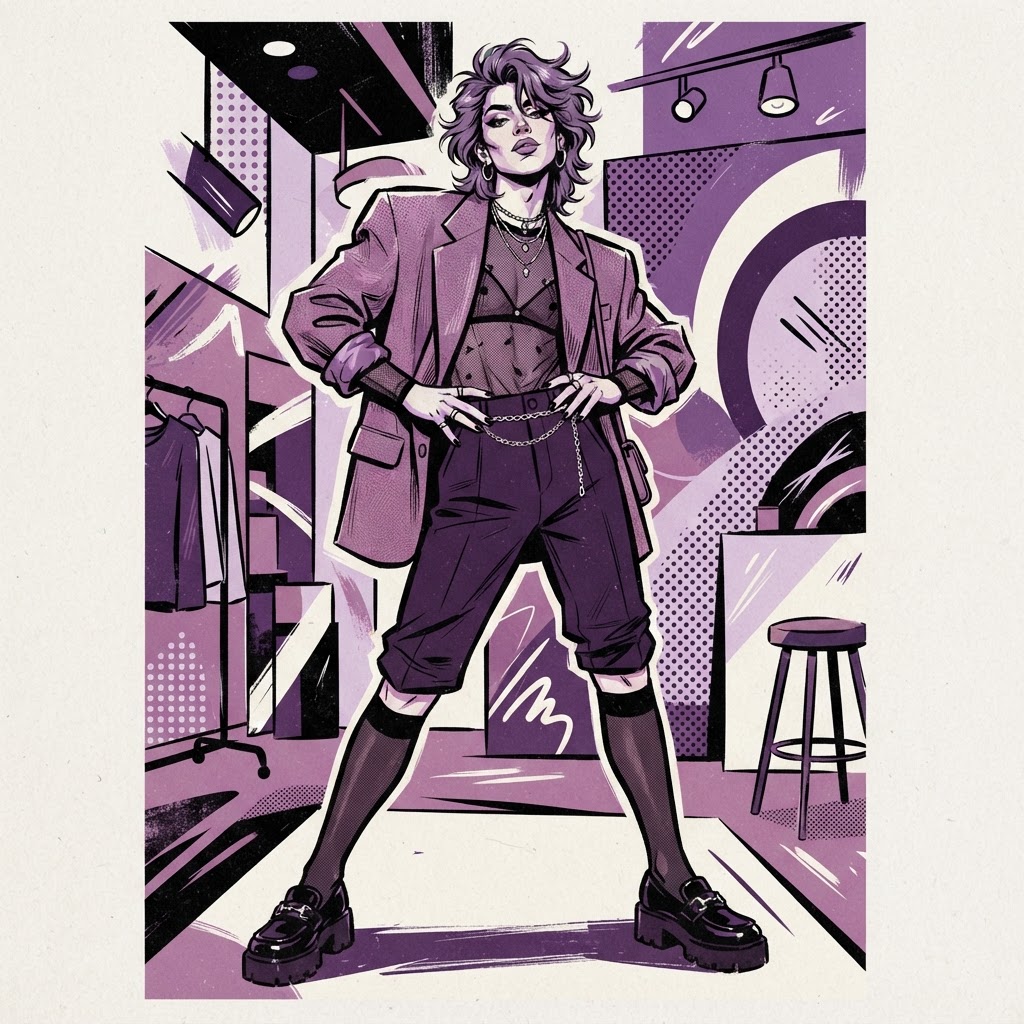
The palette of 2026 is intentionally tender: purples, mauves, soft blues — colors long coded as queer or ambiguous, now just… everywhere. Sheer fabrics, oversized tailoring, and a general refusal to respect the gender binary are dominating both runways and street style. Queer designers like Christopher John Rogers and the team behind No Sesso are leading the charge, but the influence goes way beyond designer labels.
What’s changed: queer fashion used to mean “dress loud or go home.” Now it means “dress however you want, and if that’s a sheer top with an oversized blazer and a skirt, cool.” The mandate is freedom, not a look.
8. Gay Travel Got Serious About Safety
The 2026 gay travel trends are less “where’s the hottest party” and more “where won’t I get hate-crimed.” There’s been a noticeable shift toward safety, off-peak timing, and value. Destinations like Malta, Cape Town, Spain, and Taipei are topping lists — places with strong legal protections and actual queer infrastructure.
Canada, Iceland, Portugal, Greece, and Germany are also ranking high. The conversation has moved beyond “is it gay-friendly?” to “is it gay-safe?” — a distinction that feels both obvious and newly urgent.
This isn’t fear. It’s pragmatism. Queer travelers are voting with their passports, and the destinations that want their money are the ones that have done the policy work. Everyone else can enjoy their empty hotel rooms.
9. Lavender Marriages: The Comeback No One Expected
Here’s a plot twist: as visibility has brought backlash, more queer people are looking at the concept of lavender marriages — marriages of convenience between queer people and straight friends — and thinking, “actually, maybe our foreparents had a point.”
This isn’t about going back into the closet. It’s about recognizing that marriage as an institution can be queered in ways that don’t involve a wedding industrial complex and $40,000 floral arrangements. Marry your best friend. Get the tax benefits. Have whatever sex life you want on the side. Skip the performative heteronormative wedding pageant entirely.
As one observer noted: while straight people go backwards to tradwifeism, queers are looking at lavender marriages as a solution, not a problem. The irony is thick enough to spread on toast.
10. Dairy Milk: The Queerest Thing in the Fridge
This one sounds like a joke, and it partially is, but stay with us. Alternative milks reached peak saturation — oat, almond, cashew, macadamia, pea, hemp, and whatever the hell else someone tried to milk this week. Every alt-milk is a brand with a marketing team and a KPI dashboard.
Dairy milk? No brand. Clear plastic jug. Couldn’t tell you who made it. No influencer campaigns. No “story.” It just shows up at the store in its honest, unpretentious jug.
In a culture obsessed with optimization and personal branding, there’s something deeply queer about choosing the thing with no narrative attached. Call it anti-brand rebellion. Call it going back to basics. Either way, 2026 is the year we put down the cheesecloth and embraced the udder. (Yes, we know about lactose intolerance. Get the lactaid. Live a little.)
The Takeaway
If there’s a throughline in 2026 gay culture, it’s this: the borders between subculture and mainstream are dissolving — but not in the “we’re all the same now” way that used to be the dream. It’s more like the mainstream is finally accepting that it was always a little gayer than it admitted.
Pups are on the timeline. Femboys are on the For You page. Sniffies is in The New Yorker. Queer politicians are governing. Jinkx is on Broadway. Dairy milk is a political statement.
We’re not post-queer. We’re not even close. But we’re in a moment where the culture is richer, weirder, more visible, and more contested than ever. And that’s not a crisis. That’s the good part.
What trends are we missing? What’s in or out for you? Drop a comment — we’ll be over here drinking whole milk out of the jug like the icons we are.
Related reading
- Remember Me? Earring Magic Ken
- Peppermint Is the Sweetest Force Broadway Never Saw Coming
- Remembering Tim Curry: The Man Who Made Fishnets Fabulous