
September 7 has given birth to icons, taken them away, and put their artifacts under glass at the Smithsonian. It’s a day of arrivals and departures, of skates and songs, of women who burned down the patriarchy and men who told the government to go to hell. In other words, just another Monday in queer history. Let’s dig in.
September 7, 1969 — Rudy Galindo is born in San Jose, California

On the very same September in 1969 when the Stonewall riots were still echoing through Greenwich Village, Val Joe “Rudy” Galindo entered the world about as far from a gay bar as you can get — San Jose, California, the land of strip malls and semiconductor plants. But Rudy was destined for sequins. He paired with Kristi Yamaguchi to win the 1988 and 1989 U.S. pairs championships, and when he went solo, he pulled off the ultimate Cinderella story: at age 26, long past figure-skating retirement age, he won the 1996 U.S. men’s title skating to songs from A Streetcar Named Desire and Send in the Clowns. It was the performance of a lifetime, and the crowd gave him a standing ovation before his program even ended.
Then he came out.
By doing so, Rudy Galindo became the first openly gay U.S. national figure skating champion. Not the first to be gay — figure skating has always had, let’s call it, a robust queer pipeline — but the first with the audacity to say it out loud. He later revealed he was HIV-positive, becoming one of the few public figures in the sport to do so. Galindo skated like a man who knew exactly who he was, and the world had to catch up. They usually do.
September 7, 1975 (ish) — Carl Bean records “I Was Born This Way” — dies September 7, 2021
Before Lady Gaga was even a glint in her father’s eye, before “Born This Way” was a global anthem, before the concept of a Pride banger had fully crystallized — there was Carl Bean. In 1975, Bean, an openly gay singer signed to Motown Records, released “I Was Born This Way,” a disco track that declared, with full Motown production glory, that being gay was not a choice but a birthright. It reached #3 on the Billboard Dance chart. In 1975. Think about that for a second. The same year Jaws came out, a Black gay man on the biggest soul label in America told the world he was born this way and people danced to it.
Bean didn’t stop at music. He became an ordained minister, founded the Unity Fellowship Church Movement in 1982 — the first Black LGBTQ+ church in America — and ministered to people dying of AIDS during the height of the epidemic, when the government didn’t care and most churches wouldn’t go near it. He died on September 7, 2021, at age 77. Born this way, born again, and gone on his own birthday month. There’s something cosmically perfect about that.
September 7, 2007 — Frank Kameny’s memorabilia go to the Smithsonian

Frank Kameny was fired from his job at the U.S. Army Map Service in 1957 for being gay. His response? He didn’t slink away. He didn’t go back into the closet. He filed a Supreme Court appeal — the first civil rights case based on sexual orientation — and when that failed, he spent the next five decades picketing the White House, coining the slogan “Gay is Good” (years before “Black is Beautiful” emerged), founding the Mattachine Society of Washington, and generally making the federal government’s life miserable until they started doing the right thing.
On September 7, 2007, the Smithsonian Institution — the same federal institution that once would have wanted nothing to do with him — announced an exhibit of Kameny’s personal papers and protest signs. The man the government fired for being gay now had his picket signs in the National Museum of American History. If you’re looking for proof that activism works, that’s it: the oppressor’s museum now houses the oppressed man’s protest signs. That’s not just a victory; that’s a plot twist worthy of its own Smithsonian exhibit.
In 2009, President Obama personally recognized Kameny at a White House reception, and signed an executive order extending benefits to same-sex partners of federal employees. Kameny raised his hands in the air. He’d waited 52 years for that. He died two years later, in 2011, having lived to see “Don’t Ask, Don’t Tell” repealed. Sometimes the arc of the moral universe bends toward justice, and sometimes it takes 52 years, but the man didn’t put down the lever once.
September 7, 2017 — Kate Millett dies in Paris at 82

Kate Millett’s 1970 doctoral dissertation, turned into the book Sexual Politics, didn’t just put a crack in the glass ceiling — it drove a truck through it and then backed over the wreckage. The book, which argued that patriarchy was a political institution rather than a natural state of affairs, was five weeks on the bestseller list before even catching fire, and then sold a million copies in its first year. Time magazine put her on the cover and then, in a move that should surprise absolutely no one, tried to dismiss her as a “female liberationist.” Oh, Time. You were always you.
Millett was openly bisexual — at a time when even the gay community wasn’t sure what to do with that information. She was an artist, a sculptor, a filmmaker, a photographer, and a farmer who ran an artists’ colony on her property in Poughkeepsie. She also founded an art colony for women artists. She wrote about her own bisexuality, her experiences with mental health treatment, and the mental health system in The Loony-Bin Trip, a memoir that if it were published today, would immediately get optioned by HBO.
She died on September 7, 2017, in Paris, while on vacation with her wife, Sophie Keir. She was 82 years old. The woman who wrote the foundational text of second-wave feminism died abroad with her wife, having been openly bi for half a century. Not a bad way to go.
September 7, 1987 — Evan Rachel Wood is born in Raleigh, North Carolina
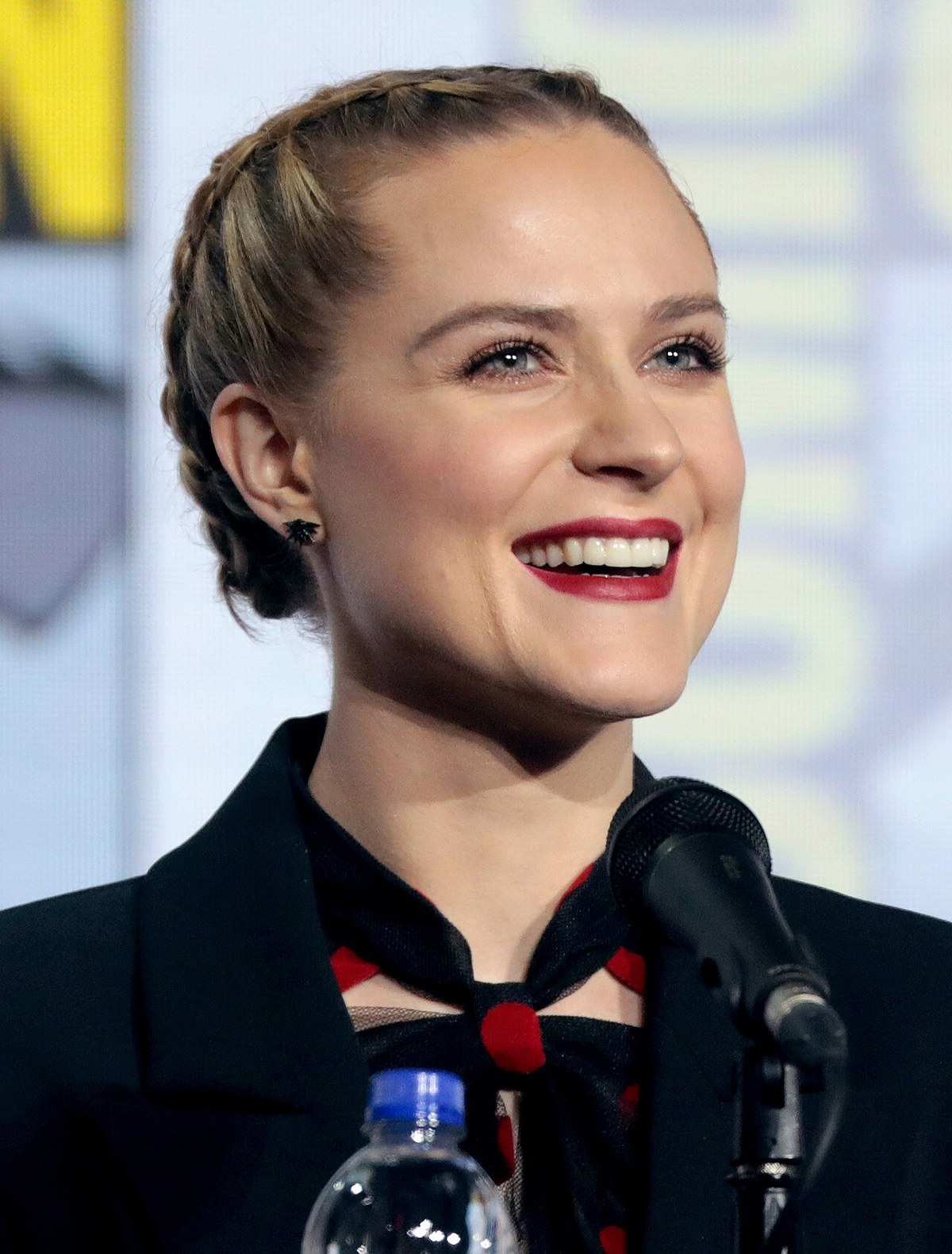
Evan Rachel Wood arrived just as the queer community was being reshaped by AIDS activism and the dawn of a new culture of visibility. Born on September 7, 1987, into a family of theater professionals, Wood has been acting since she was a child — her breakthrough came with 2003’s Thirteen, which honest to god should have made every parent in America lock their女儿 in a nice safe room with PBS.
Frozen aside, Wood came out as bisexual in 2011 at an HRC event, later noting that she’d been told coming out as bi would hurt her career — a piece of advice we hear every time a celebrity comes out as bi, which is never once correct. She became one of the most prominent faces of the #MeToo movement, testifying before Congress and naming her abuser publicly. She stars in HBO’s Westworld where she plays an android who gains consciousness and kills everyone who wronged her — a metaphor so perfect for the #MeToo movement it practically writes itself.
Wood has said she came out because she wanted to be visible for young people who were struggling with their sexuality. “I think it’s important to share that, because everything that’s been put out there for me to learn from, I want to be that for someone else.” Born this way, living out loud, and turning 39 today.
What September 7 teaches us
If you’re sensing a pattern here, good. September 7 is a day that brings us artifacts — literal ones, in Frank Kameny’s case — and then takes them away, in the same week it takes Carl Bean and Kate Millett, and it brings us new ones, in the same day it gave us Rudy Galindo and Evan Rachel Wood. The baton passes. The skater spins. The singer falls silent. The professor dies in Paris with her wife. The actress turns 39 and keeps talking.
And at the Smithsonian, a man’s protest signs still hang behind glass — a relic of a fight that’s never over, but has come a very long way. Gay is good. We were born this way. And on September 7, we remember all of it.
Happy birthday, Rudy. Happy birthday, Evan. Rest in power, Carl and Kate.