

New York Fashion Week is here again, and while the tents are busy pretending that fashion has never been gayer than it already is, the actual queer fashion world is doing what it always does: throwing better parties, designing bolder clothes, and reminding everyone that gender is just a suggestion someone wrote down once.
This week’s Fashion Spotlight is all about the LGBTQ designers, icons, and rule-breakers reshaping what we wear and how we wear it — from a legacy show at the Brooklyn Museum to the most romantic power couple in fashion right now.
dapperQ’s “Legacy” — The Biggest Queer Runway in America, 11 Years Running
On Thursday, September 10, dapperQ takes over the Brooklyn Museum’s Beaux Arts Court for the 11th edition of its NYFW show — the largest LGBTQIA+ fashion presentation in the country. Ten featured designers, 70-plus LGBTQ models, and a runway that has spent over a decade proving that queer style isn’t a trend, it’s the whole operating system.
This year’s show is titled “Legacy,” and the timing is pointed. At a moment when brands are quietly backing away from Pride campaigns and corporate “allyship” has all the conviction of a LinkedIn post, dapperQ is still here — still platforming queer designers, still filling a museum with the kind of fashion that makes straight people ask, “Is that… a dress or a…?” (It’s a dress. Or a du-rag. Or both. Relax.)
The show, produced in partnership with Brooklyn Pride, has become NYFW’s most reliable platform for gender-fluid, nonbinary, and queer design — the stuff that the mainstream fashion press discovers six months later and calls “boundary-pushing.” dapperQ was there first. Brooklyn Museum, Thursday night. Bring your fashion eye.
Christian Cowan: Getting Dressed as Spectacle

Christian Cowan’s Fall/Winter 2026 collection, “Before the Door Opens,” turned the private ritual of getting dressed into public spectacle. The show — presented at NYFW this past February — was all moody crimson, exposed lace, corsetry laced through with fur, and flashes of metallic that WWD called “diva behavior.” Which, if you know Cowan’s work, is the highest possible compliment.
The collection marked a turn toward something more elevated for Cowan, who built his name on dressing Lil Nas X, Cardi B, and the kind of pop stars who treat a red carpet like a controlled demolition. (“Before the Door Opens” opens a new, elevated door for him, one he should continue walking through,” WWD noted, with the sort of restrained enthusiasm that passes for screaming in fashion publishing.)
Cowan is openly gay, Filipino-British, and — in case you missed the most chic hard launch in queer romance history — engaged to Sam Smith after three years together. He designed Smith’s look for the 2026 Met Gala. Their relationship is the rare fashion-music pairing that doesn’t feel manufactured, partly because Cowan has been quietly building a serious design vocabulary underneath the glamourpussy surface.
Sam Smith: “Hazel Eyes” and the End of the Heartbreak Anthem

Sam Smith — who came out as non-binary in 2019 and has spent every year since obliterating whatever was left of the men’s/women’s fashion divide — released their fourth album, “Hazel Eyes,” in August. The title is a love letter: the album is named after Christian Cowan’s eye color. Which is either the most romantic thing you’ve ever heard or deeply extra, and honestly, it’s both.
Smith told The New York Times that for the first time, they’ve been able to write music about joy rather than the heartbreak anthems that made them famous. “Unholy” was the vindication era; “Hazel Eyes” is the domestic-bliss era. The fashion follows: Smith’s recent looks have moved from the latex-and-corset provocation of the “Gloria” era toward something softer, more tailored, more comfortable — the wardrobe of someone who actually likes where they are.
The couple’s Met Gala appearance together — Smith in Cowan, both glowing — was the closest the Met red carpet has come to a queer wedding photoshoot. We’re not saying we need an actual wedding spectacular, but we’re not not saying that.
Telfar Clemens: The Luxury That Doesn’t Gatekeep
There are luxury bags, and then there’s the Telfar Shopping Bag — the “Bushwick Birkin,” the unisex accessory that turned “not for you — for everyone” into a design philosophy and a business model. Telfar Clemens, a queer Liberian-American designer, has been making unisex clothing since 2005, long before gender-fluid fashion became a trend cycle buzzword.
The genius of the Telfar bag isn’t just the design — boxy, colorful, emblazoned with the signature “TC” logo — it’s the drop system. Weekly restocks, announced on social media, at prices ($150-$202) that don’t require a finance degree or a waiting list. The brand built a grassroots following in the Black and queer communities first, then watched the rest of the industry try to figure out how to replicate community as if it were a color story.
In 2026, the bags keep selling out. The drops keep happening. And Clemens — who has never needed a fashion establishment to tell him he’s arrived — keeps doing what he’s always done: making luxury that actually includes the people it claims to serve. Radical concept, apparently.
Billy Porter: The Man Who Killed the Tuxedo (and We Thank Him)

Billy Porter didn’t just break the red carpet dress code — he set it on fire and danced on the ashes. The 2019 Oscars Oscars tuxedo gown (designed by Christian Siriano — yes, credit where it’s due) was the shot heard round the world: a custom gown-tux hybrid that made every “best dressed” list and every conversation about gender and fashion for the next five years.
Porter, who has been out and loud about his homosexuality for his entire career, has never treated fashion as separate from activism. Every carpet is a runway, every runway is a statement, and every statement is essentially: “I dare you to have a problem with this.” In 2024, he was honored at the Gershwin Prize ceremony looking like the love child of Josephine Baker and a disco ball, because of course he was.
He’s still the measuring stick for queer red carpet risk-taking. When someone shows up in something wild and someone on Twitter says “Billy Porter did it first,” they’re not wrong.
Lil Nas X: The Cowboy Who Conquered Couture
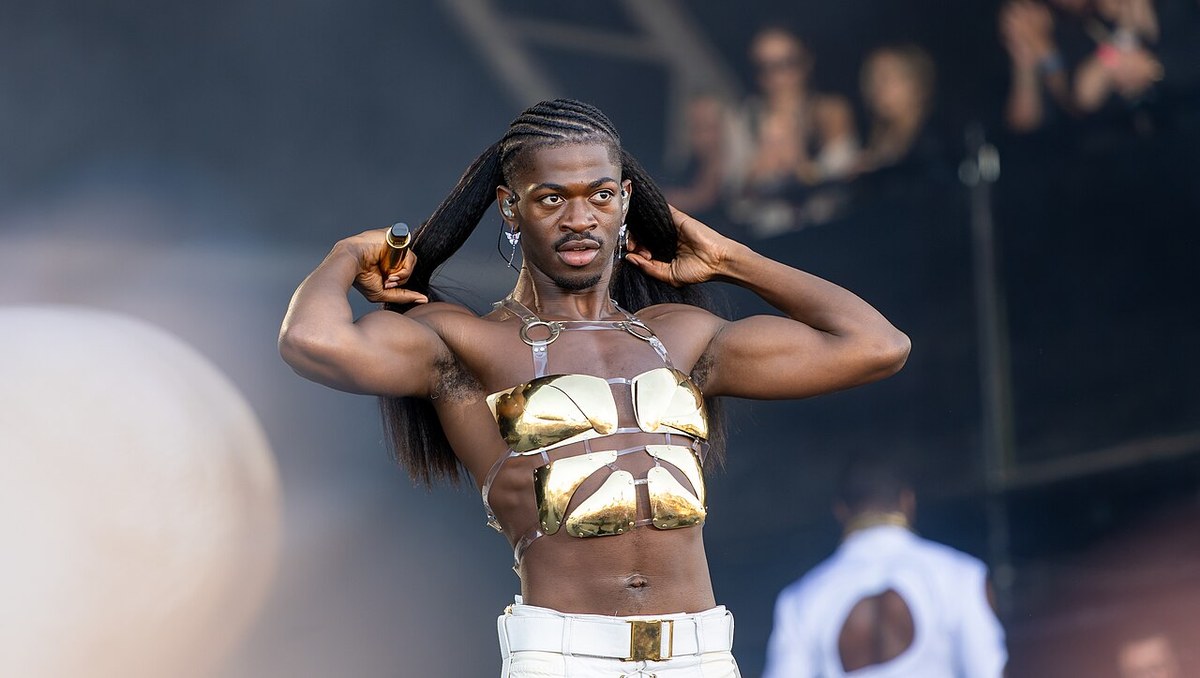
When Lil Nas X showed up to the MTV VMAs in custom Western tailoring — cowboy hat, bedazzled everything, a silhouette that read like someone asked “what if Marlboro Man went to Studio 54?” — it was the latest iteration of a fashion philosophy he’s been running since “Old Town Road” made him the biggest gay rapper on the planet.
Lil Nas X doesn’t play it safe. He’s worn pink patent leather, cropped tops, feathered capes, and whatever the opposite of subtle is. His collaboration with Christian Cowan — a punk-inspired collection celebrating the LGBTQ+ community — was the rare celebrity-designer partnership that actually made sense, because both of them treat fashion like a weapon and a party at the same time.
The interesting thing about his style evolution is what happens when the provocation becomes the expectation. Every outfit is a dare, and so far, nobody’s been brave enough to take him up on it. The kid who walked his first red carpet in a cowboy hat and chaps is now one of the most watched fashion figures in pop music. The chaps got more expensive. The attitude stayed exactly the same.
The Verdict
Queer fashion in 2026 isn’t waiting for permission. It’s not waiting for Pride month. It’s not waiting for a brand collaboration or a thirty-day sponsor. It’s showing up at NYFW, taking over museums, naming albums after eye colors, selling luxury bags to everyone, and wearing whatever the hell it wants on the red carpet.
The corporate world discovered “gender-fluid fashion” about three years ago and has been congratulating itself ever since. Meanwhile, the queer community has been doing it for decades — and this week, at the Brooklyn Museum and on the runways of NYFW, they’re showing everyone how it’s actually done.