
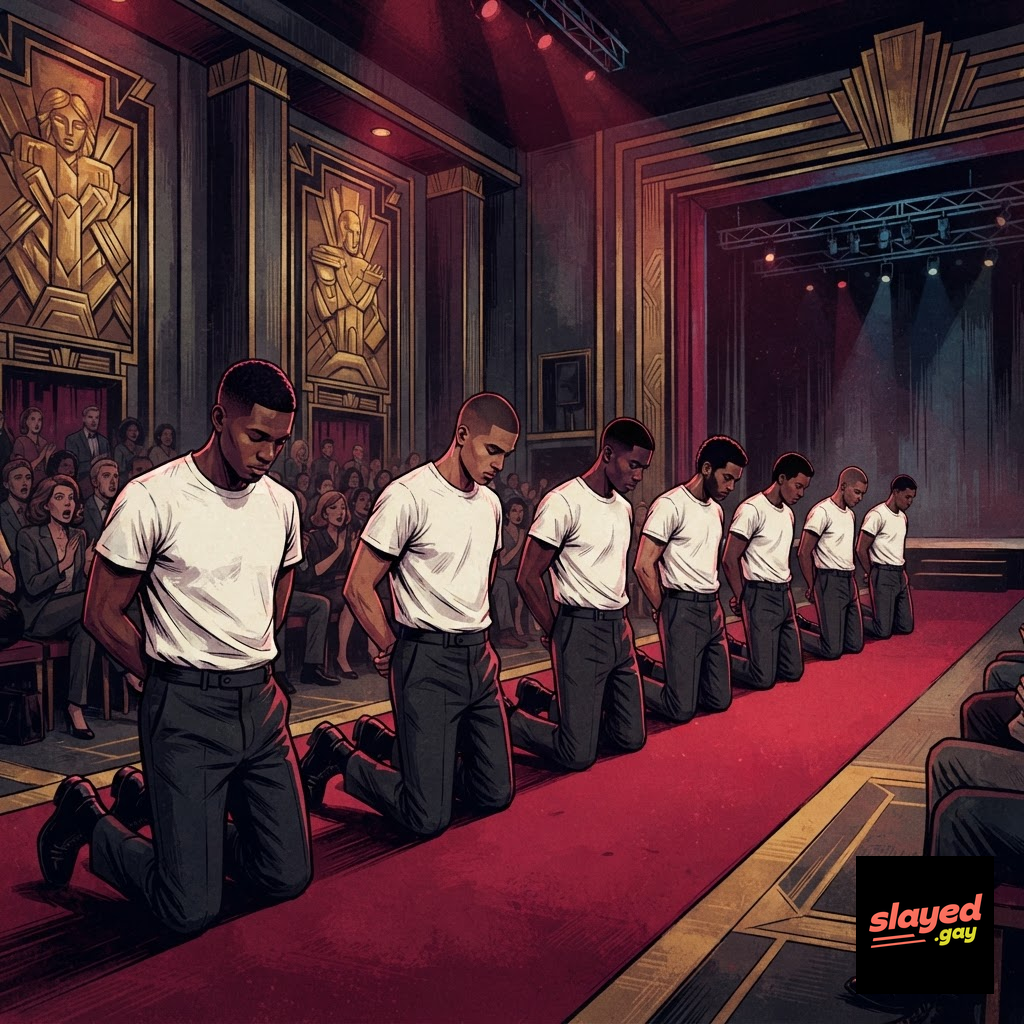
There’s a moment in Willy Chavarria’s Spring 2026 Paris Fashion Week show that made people weep. Thirty-five models — street-cast, crew-cut, wearing white XXXL tall tees emblazoned with the ACLU logo — knelt on a red carpet in Salle Pleyel as an acoustic version of “California Dreamin’” filled the room. They knelt the way ICE detainees kneel. The way people kneel when they’re told to kneel. The way you kneel when your hands are behind your back and you don’t know what happens next.
This is what a Willy Chavarria fashion show looks like. Not a parade of clothes for rich people to clap at. A political act with really good tailoring.
From Huron to Paris (And Never Forgetting Where He Came From)
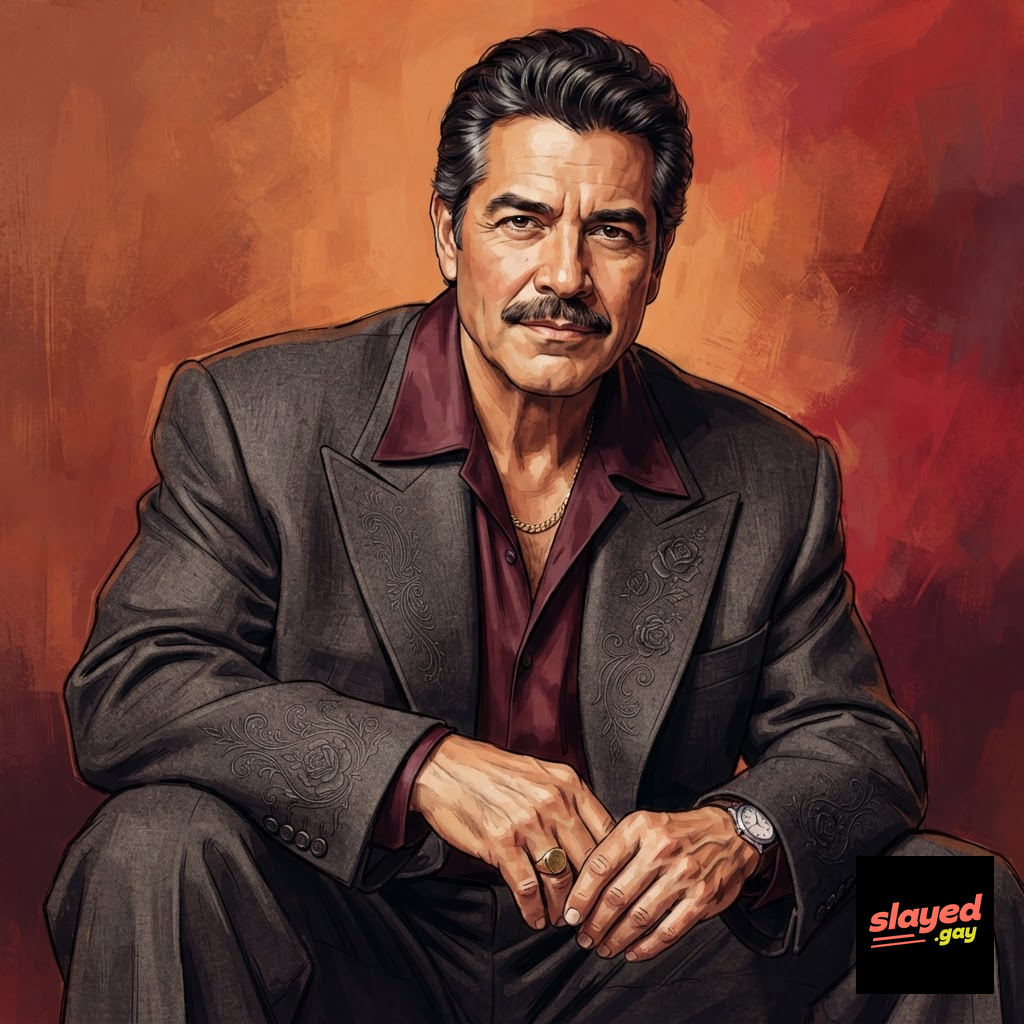
Willy Chavarria was born in 1967 in Huron, California — a tiny farming town in Fresno County that most people would struggle to find on a map. His father was Mexican-American. His mother was Irish-American. In 1950s segregated California, that interracial marriage was itself a quiet act of defiance.
He grew up queer, brown, and working-class in a community powered by immigrant farm labor. The kind of background that fashion usually expects you to shed like a coat before you enter the industry. Chavarria didn’t. He carried it into every collection, every casting decision, every runway show.
His career started inauspiciously — packing boxes in the shipping department at Joe Boxer, the irreverent underwear brand, in San Francisco. He’d stay after hours sketching designs until someone noticed. That someone was Joe Boxer founder Nicholas Graham, who gave him an internship that became a design role.
From there: Ralph Lauren, where he worked on the RLX cycling line. Then Calvin Klein, where he rose to Senior Vice President of Design from 2021 to 2024 — all while running his own eponymous label on the side. Because apparently Willy Chavarria doesn’t believe in the concept of “too much.”
The Aesthetics of Defiance
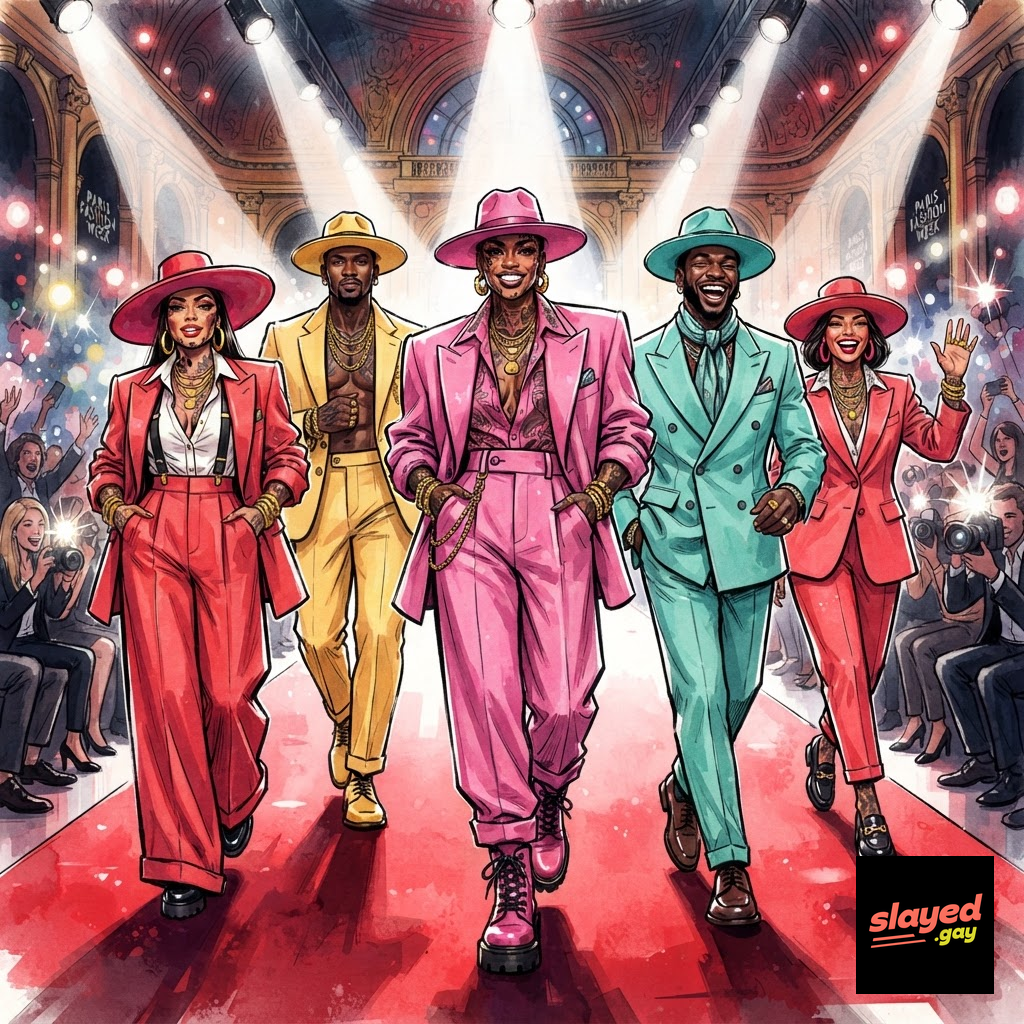
When Chavarria launched his own label in 2015, he didn’t make the kind of clothes that whisper. He made the kind that shout — in piñata colors, in oversized silhouettes inspired by cholo culture, in zoot suits that look like they could walk themselves down the runway.
He was one of the first New York designers to cast exclusively models of color. His models aren’t blank canvases — they’re tattooed, muscled, sultry, and real. They look like they walked out of a Chicano neighborhood and onto a runway without changing anything about themselves.
“I wanted it to feel like couture, to feel regal,” he said of one collection, “and then to shift that against the toughness of New York.”
In 2018, he showed his Spring/Summer collection at the Eagle Bar in New York City — because of course he did — blending religion, lowrider culture, and leather bar aesthetics. Pulitzer Prize-winning journalist Robin Givhan called his shows “some of the most socially engaging runway shows in New York.”
The man took the self-fashioning of young Chicanos — the baggy pants, the cinched waists, the satin boxers, the mustaches — and elevated it to luxury fashion. Not as costume. Not as parody. As art that says: this culture has always been beautiful. You just weren’t paying attention.
The Awards (And They Keep Coming)
Let’s list a few, because the mantel is getting crowded:
- CFDA Menswear Designer of the Year: 2023 and 2024
- Time Magazine’s 100 Most Influential People: 2025
- Cooper Hewitt National Design Award: 2022
- Latin American Fashion Awards Designer of the Year: 2023 and 2025
- WWD Menswear Designer of the Year: 2025
- ACLU NYCLU Liberty Award: 2025
- ANDAM Fashion Awards finalist: 2025
This is not a designer who’s quietly competent. This is a designer who’s loudly, aggressively, joyfully excellent — and the industry can’t look away.
Fashion as Activism
In July 2025, the ACLU named Chavarria an Artist Ambassador for immigrants’ rights and LGBTQ rights. It wasn’t a branding exercise. Chavarria had already been collaborating with the ACLU on runway collections, hosting voter engagement events at Parsons, and co-founding Creatives for Freedom alongside Gabriela Hearst and Padma Lakshmi.
“I’m Mexican American and I grew up in a farming community in California powered by immigrants; all of us exposed to the harsh realities of racial and economic injustice,” he said in his ACLU statement. “My own Chicano culture, queer culture, and my family’s immigrant roots are intertwined in the fashion that my team and I create and in our activism.”
His Fall/Winter 2025 show — titled “Tarantula” and staged at the American Cathedral in Paris to mark his label’s tenth anniversary — featured a recorded sermon by Episcopal Bishop Mariann Edgar Budde calling for compassion for LGBTQ people and immigrants. Indya Moore and Paloma Elsesser walked the runway. The whole thing was a love letter to queer brown survival.
Then came the SS26 “Huron” show. Named after his hometown. Models knelt for ICE. The President of El Salvador, Nayib Bukele, felt so provoked he responded on X, essentially offering to send prisoners to Paris. When a fashion show makes a head of state defensive, you know it’s doing something right.
The Latest: “World of Willy”
For Fall 2026, Chavarria went even bigger. Two thousand guests. A live film noir shot in real-time. Latin music stars Santos Bravos, Feid, Lunay, and Mon Laferte performing. Models on gleaming lowrider bikes. A new entry-level workwear line called “Big Willy.” He took his bow in a T-shirt reading “Protection is Love” — sold to raise funds for Rainbow Railroad, the nonprofit that helps LGBTQ people escape persecution.
The theme, he said, was love. “Eternal love, the love that connects us all, and the love that will live on beyond our flesh existence.” Even the political messaging became more subtle this time — woven in rather than announced — but it was unmistakably there. Chavarria doesn’t do apolitical.
And there are rumors he’s been courted for the creative director role at Fendi. Brad Pitt wore his suits. James Harden and Stefon Diggs walked his runway. Willy Chavarria’s world isn’t just growing — it’s becoming the world.
Why Willy Chavarria Matters
In an industry that loves to pat itself on the back for “diversity” while doing nothing structural about it, Chavarria is the real thing. He didn’t assimilate. He didn’t tone it down. He didn’t trade his Chicano identity or his queerness for mainstream acceptance.
He took everything that made him different — the farmworker town, the cholo aesthetic, the gay leather bars, the brown skin, the immigrant roots — and built an empire out of it. An empire that now has the attention of Paris, the ACLU, Time Magazine, and the President of El Salvador (whether he likes it or not).
Willy Chavarria isn’t just designing clothes. He’s designing a world where queer brown people don’t have to kneel. And if they do, he’ll put it on a runway and make everyone watch.
Related reading
- Peppermint Is the Sweetest Force Broadway Never Saw Coming
- Queer Fashion This Week: Tailoring, Sheer Nerve, and the Death of the Dress Code
- Madonna at World Pride: The Original Pop Disruptor Still Has the Rainbow Receipts