

Some dates whisper through history. July 27 grabs the mic.
If you’re looking for a single day on the calendar that captures the full arc of LGBTQ+ history — from criminalization to church pulpits, from plague naming to institutional acceptance — you could do worse than July 27. It’s a day that keeps showing up at the party, and it keeps bringing receipts.
1940: A Preacher’s Kid Who Preached Back
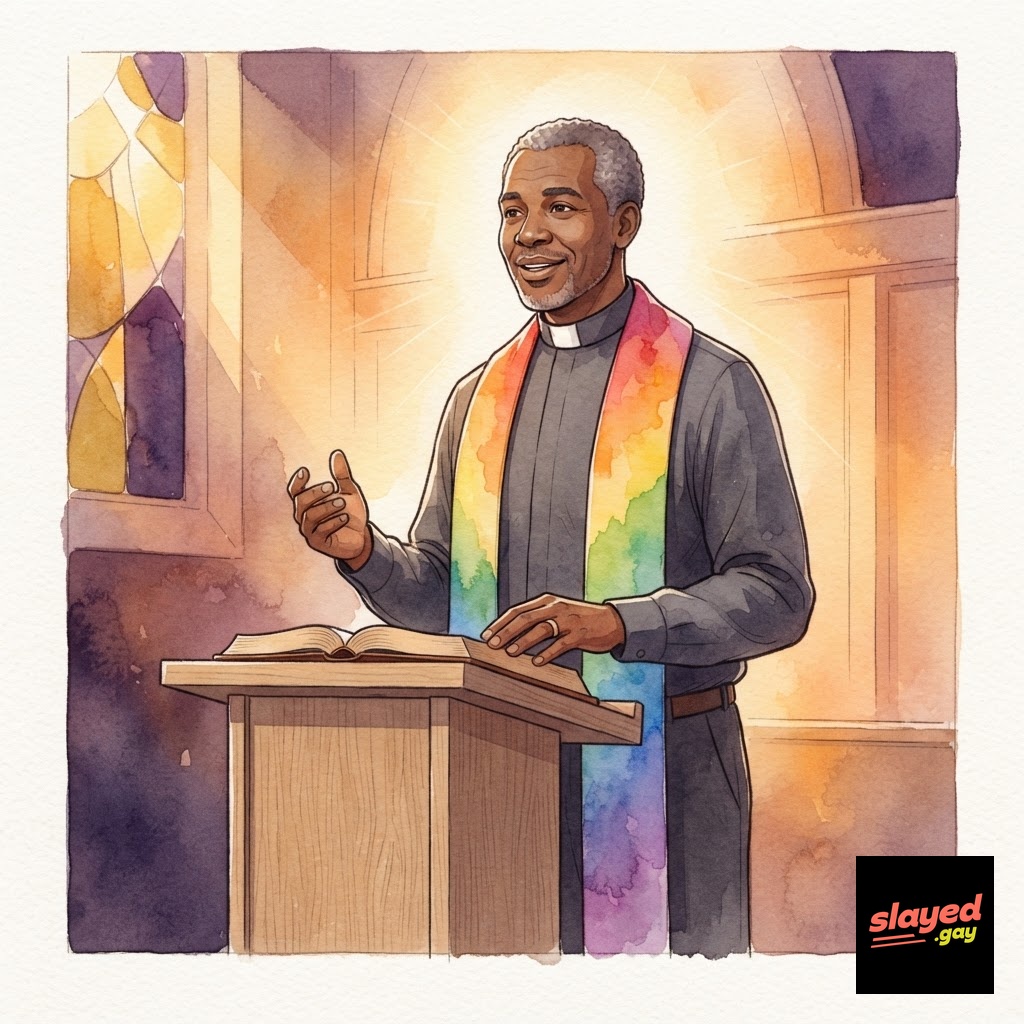
Troy Deroy Perry Jr. was born on July 27, 1940, in Tallahassee, Florida. His father was a moonshiner who ran off when Troy was five. His mother remarried, and his stepfather — a bootlegger — would chase Troy around the house with a shotgun. It was, by all accounts, a deeply affectionate childhood.
Kidding. It was awful. Perry found refuge in the Pentecostal church, where he was preaching by age 13 and ordained by 15. He married a woman at 18 — because that’s what you did — had two sons, and eventually came out. The church promptly defrocked him. His wife left. He lost custody of his children.
So he did what anyone would do: he founded an entirely new denomination.
On October 6, 1968 — a year before Stonewall — Perry gathered 12 people in his living room in Huntington Park, Los Angeles, and launched the Metropolitan Community Church. It was the first Christian denomination with a primary ministry to LGBTQ+ people. At a time when “gay Christian” was considered an oxymoron by most of the religious establishment, Perry built a church that said God didn’t make mistakes — and the establishment could deal with it.
MCC now has congregations in dozens of countries. Perry led the first gay rights march on the California State Capitol in 1970, sued the state of California for the right to marry (in 1970 — yes, 1970), and married his husband Philip Ray DeBlieck in Canada in 2003. He was arrested for refusing to turn over communion wine to LAPD officers during a raid on his church. He helped organize the first Christopher Street Liberation Day march in Los Angeles.
He’s 85 years old now. In May 2026, the Washington Blade profiled him with the headline “Still marching.” He is, as the kids say, an icon who never stopped.
1967: England and Wales Finally Decriminalize Gay Sex (Sort Of)
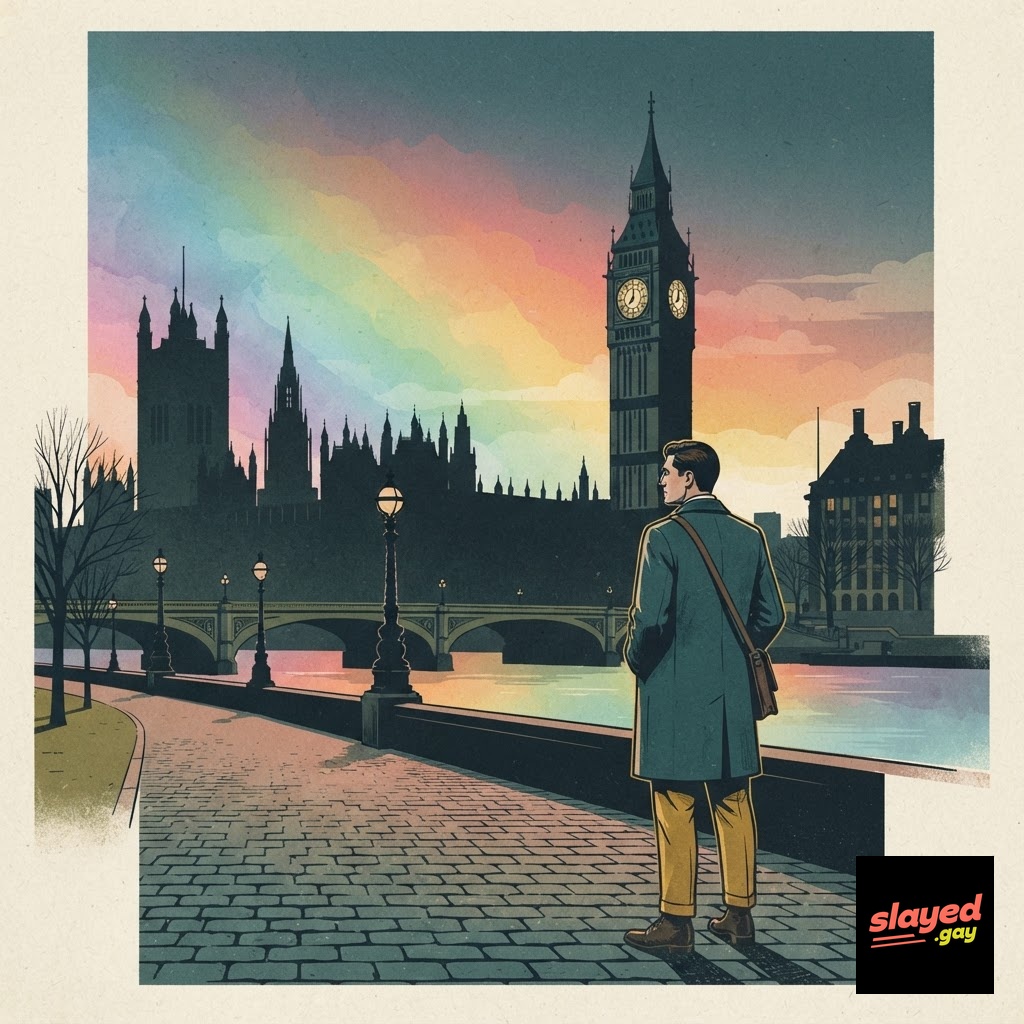
Ten years after the Wolfenden Report recommended decriminalizing homosexuality in Britain — a decade of deliberate institutional foot-dragging — the Sexual Offences Act of 1967 finally took effect on July 27 of that year.
The law decriminalized “private” homosexual acts between men over 21. The word “private” was doing a lot of heavy lifting: it excluded anyone in the military, anyone in a hotel room, anyone who lived in shared accommodations (which in 1967 was most people), and anyone whose door didn’t have a lock that could prevent a third party from walking in. Scotland and Northern Ireland didn’t follow suit for years.
Still, it was a seismic shift. For the first time in centuries, a man in England or Wales could have sex with another man without the law explicitly making him a criminal — provided he was old enough, private enough, and alone enough. The age of consent was set at 21, compared to 16 for heterosexuals, a disparity that would take 34 more years to eliminate.
It was the beginning of the end of formal criminalization in the UK. It wasn’t liberation, but it was the first crack in a wall that had stood since the Tudor era. Alan Turing had been dead for 13 years. Oscar Wilde had been dead for 67. They would have appreciated the gesture.
1982: A Plague Gets a Name
On July 27, 1982, in a conference room at the CDC in Washington, D.C., a group of gay community leaders, government scientists, and public health officials sat down and did something that seems mundane but was, in fact, historic: they gave the disease a name.
Until that meeting, the condition had been called GRID — Gay-Related Immunodeficiency. The name was a scientific term and a death sentence rolled into one, because it told the world that only gay people got it. By the time the CDC adopted the new name — Acquired Immune Deficiency Syndrome, or AIDS — 593 cases had been reported and 243 people had died.
The renaming was not just semantic. It was a deliberate decision to detach the disease from a single community, to acknowledge that straight people, hemophiliacs, and injection drug users were also dying, and to demand a public health response that didn’t treat gay men as expendable. It was one of the most consequential naming decisions in medical history.
It also marked the moment when the gay community’s relationship with the government went from adversarial to existential. ACT UP would be founded five years later. The AIDS Memorial Quilt would follow. The fight for research funding, drug approval, and basic human dignity would define the next two decades of LGBTQ+ activism. And it all started with a name.
2015: The Boy Scouts Finally Grow Up
On July 27, 2015 — exactly 53 years after the CDC named AIDS, and exactly 48 years after the UK decriminalized gay sex — the Boy Scouts of America’s National Executive Board ratified a resolution removing the national restriction on openly gay adult leaders and employees.
This was not a smooth process. The BSA had banned openly gay scouts until 2013, when a deeply reluctant vote allowed gay youth but continued to bar gay adults — a policy so logically inconsistent that even the organization’s own members struggled to explain it. (Gay 17-year-olds could lead troops, but gay 18-year-olds couldn’t? Were they supposed to age out of being gay?)
The July 27 resolution ended that hypocrisy. It allowed chartered organizations — many of them churches — to select adult leaders “without regard to sexual orientation.” The LDS Church, which had been the BSA’s largest chartering organization, threatened to pull thousands of troops. They eventually did, in 2019, ending a century-long partnership.
But the policy held. Gay men who had been scouts, who had earned Eagle Scout, who had volunteered for decades, could finally be openly themselves without being kicked out. For an institution that literally uses knots to teach moral character, the resolution was a straightforward lesson in untying the wrong ones.
The Thread
July 27 keeps showing up. A preacher’s birth, a law’s enactment, a plague’s naming, a ban’s repeal. Each moment, on its own, is a footnote. Together, they trace a line from persecution to pulpit, from criminalization to decriminalization, from death sentence to institutional acceptance.
History doesn’t happen in a straight line — but sometimes, on certain days, it lines up anyway.
Related reading
- This Day in Gay: July 20
- This Day in Gay: August 24, When Queer History Refused to Behave
- This Day in Gay: August 3 and the Queer Fight to Own the Story











[…] This Day in Gay: July 27 […]