
If you needed proof that September 21 is one of the gayest days in the calendar, consider this: in the span of exactly twenty-five years, this single date gave us a beloved Southern lesbian novelist, the founding of America’s first lesbian rights organization, a pioneering gay historian who literally wrote the book on gay history, and Billy Porter. That’s not a coincidence. That’s a conspiracy of fabulousness.
1944: Fannie Flagg Enters the Chat
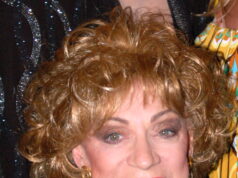
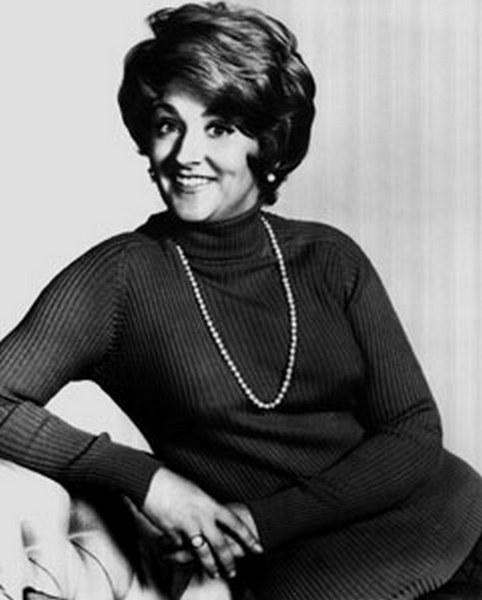
On September 21, 1944, Fannie Flagg was born in Birmingham, Alabama, where presumably she emerged already armed with a drawl and a devastating one-liner. Flagg would grow up to become a comedian, actress, and author whose 1987 novel Fried Green Tomatoes at the Whistle Stop Cafe became a cultural phenomenon and an Academy Award-nominated screenplay. You know the one. It’s the movie where two women share an intensely close bond that straight audiences spent decades insisting was “just friendship,” while the rest of us exchanged knowing glances across the theater.
Before the novel, Flagg was a beloved panelist on the game show Match Game from 1973 to 1982, where she honed her comedic timing in front of a national audience. She was openly lesbian in an era when being openly anything could end your career, which makes her success all the more remarkable. Flagg has spoken candidly about her relationship with fellow author Rita Mae Brown and her struggles with dyslexia, which never stopped her from writing bestsellers. Take that, expectations.
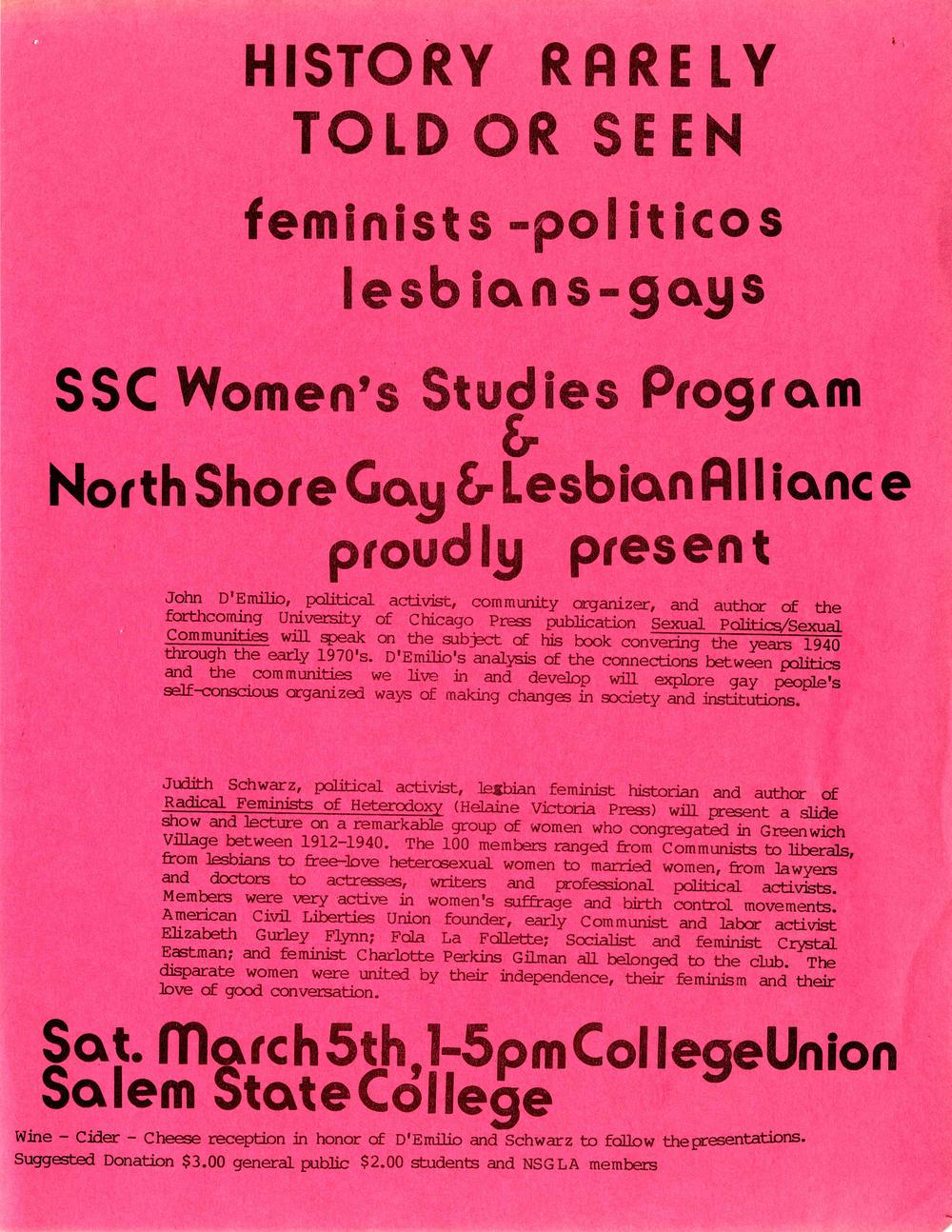
1948: John D’Emilio, the Man Who Made Gay History… About Gay History
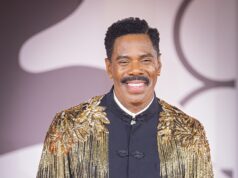
Four years later, on September 21, 1948, John D’Emilio was born. D’Emilio would grow up to become not just a gay man but the gay man who made it his life’s work to document gay history as an academic discipline. His 1983 book Sexual Politics, Sexual Communities: The Making of a Homosexual Minority in the United States, 1940-1970 was the first monograph in U.S. gay history. That’s right. Before D’Emilio, gay history as a formal field of study essentially did not exist in the academy. He built it.
Now professor emeritus of history and women’s and gender studies at the University of Illinois Chicago, D’Emilio has spent decades chronicling the organizations, individuals, and movements that laid the groundwork for modern LGBTQ rights. His work covers the Mattachine Society, the Daughters of Bilitis, ONE, Inc., and the homophile movement that preceded Stonewall. In other words, he’s the reason we know about the people who made it possible for the rest of us to exist in public. Historical irony alert: D’Emilio was awarded a National Endowment for the Humanities fellowship in 1999, three years after a law he’d spent his career studying the resistance to (we’re getting to that) was signed into law. The government eventually caught up with his scholarship. Slow learners.
1955: The Daughters of Bilitis Say “Enough”
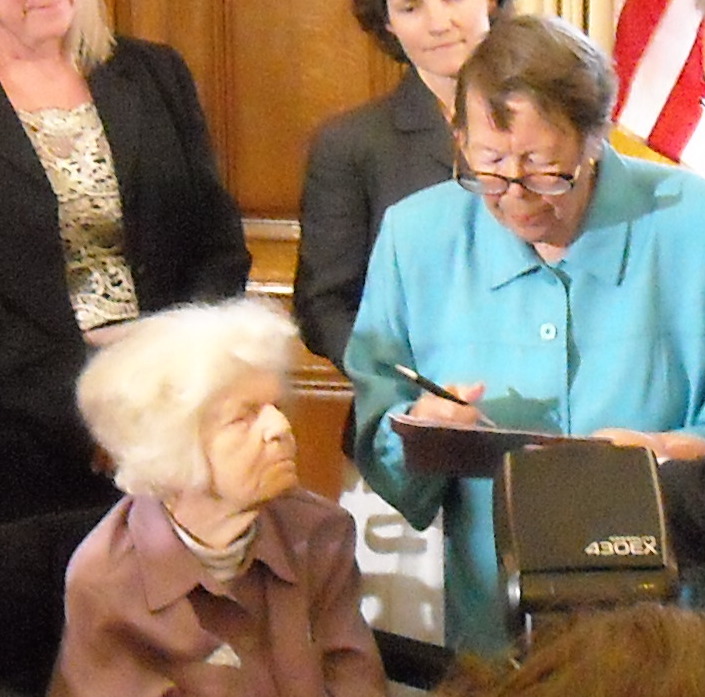
Seven years after D’Emilio’s birth and eleven years after Flagg’s, on September 21, 1955, four lesbian couples gathered in San Francisco and founded the Daughters of Bilitis (DOB), the first lesbian rights organization in the United States. The founding members included Del Martin and Phyllis Lyon, a couple who had been together for three years and were tired of having literally nowhere to socialize except gay bars that were subject to regular police raids. Their solution? Start a club. Because of course lesbians would respond to systemic oppression by founding an organization with bylaws, a newsletter, and a clear chain of command.
The Ladder, DOB’s newsletter, became the first nationally distributed lesbian publication in the United States. The organization grew from a small social group into a national network with chapters across the country, advocating for lesbian rights, education, and visibility at a time when homosexuality was still classified as a mental illness. Martin and Lyon would go on to become icons of the LGBTQ rights movement, and in 2008, they became the first same-sex couple married in California after the state supreme court legalized marriage equality, with San Francisco Mayor Gavin Newsom officiating. Del Martin passed away just months later, but not before she and Lyon had spent fifty-five years together proving that “just a phase” can be a lifetime.
1969: Billy Porter Is Born and the Universe Braces Itself
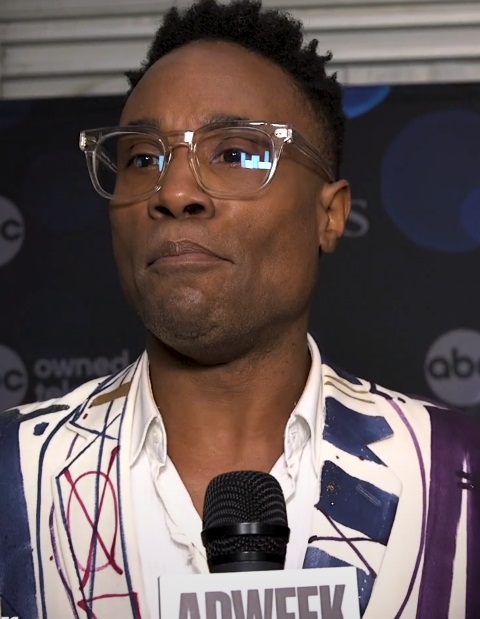
And then, on September 21, 1969, just three months after the Stonewall riots ignited the modern gay liberation movement, Billy Porter was born in Pittsburgh, Pennsylvania. You almost get the feeling the universe was paying attention. Porter would grow up to become a Tony-winning, Emmy-winning, Grammy-nominated, fashion-obliterating force of nature whose very existence on a red carpet sends conservative commentators into a tailspin. And for that alone, we thank him.
Porter won the 2013 Tony Award for Best Actor in a Musical for his role as Lola in Kinky Boots, bringing house down night after night on Broadway. But it was his role as Pray Tell in the FX series Pose that made television history: at the 71st Emmy Awards in 2019, Porter became the first openly gay Black man to win Outstanding Lead Actor in a Drama Series. His acceptance speech referenced his childhood in the Pentecostal church and his journey to self-acceptance, and it was the kind of moment that makes you realize representation isn’t just a buzzword; it’s a lifeline.
And then there are the red carpets. Porter’s 2019 Oscars gown, a Christian Siriano creation that was a tuxedo on top and a velvet ballgown on the bottom, didn’t just break the internet. It rearranged its furniture. He has since arrived at events encrusted in crystals, carried in on a litter by shirtless men, and worn a motorized hat with fringed curtains that opened and closed. The man treats every carpet like a Met Gala and every Met Gala like a personal challenge to outdo himself. We are merely witnesses.
The September 21 Effect
So there you have it. September 21 is not just the first day of autumn. It’s the birthday of a lesbian literary icon, a gay historian who invented gay history as an academic field, the founding date of the first lesbian rights organization in America, and the birthday of one of the most unapologetically queer performers to ever walk a red carpet. Four events. Twenty-five years. A revolution, basically, on a schedule.
Fannie Flagg gave us stories. John D’Emilio gave us the history. The Daughters of Bilitis gave us the movement. And Billy Porter gave us the spectacle. September 21 didn’t just happen to be gay. It showed up to work.