

Happy Monday, gentlemen. If you’re sitting at your desk, nurse-drinking an iced matcha and pretending to analyze spreadsheets, let’s take a quick break. While you’re trying to stretch a fifteen-minute task into a four-hour afternoon, history has been busy—particularly queer history.
July 20 is a spectacularly stacked day on the LGBTQ+ calendar. We’re not talking about polite historical footnotes; we are talking about empire-conquering drama queens, nineteenth-century Parisian outdoor cruising scandals, political showdowns with prehistoric bigots, and the moment our polite northern neighbors decided to show up the United States.
From the ancient battlefields of Macedonia to the manicured bushes of the Tuileries, and from the floor of the U.S. Senate to the wedding chapels of Ontario, July 20 has seen it all. Let’s take a trip through the hilarious, dramatic, and deeply resilient timeline of the gayest day of the year.
356 BC — Alexander the Great is Born (And Sets the Standard for Dramatic Boyfriends)
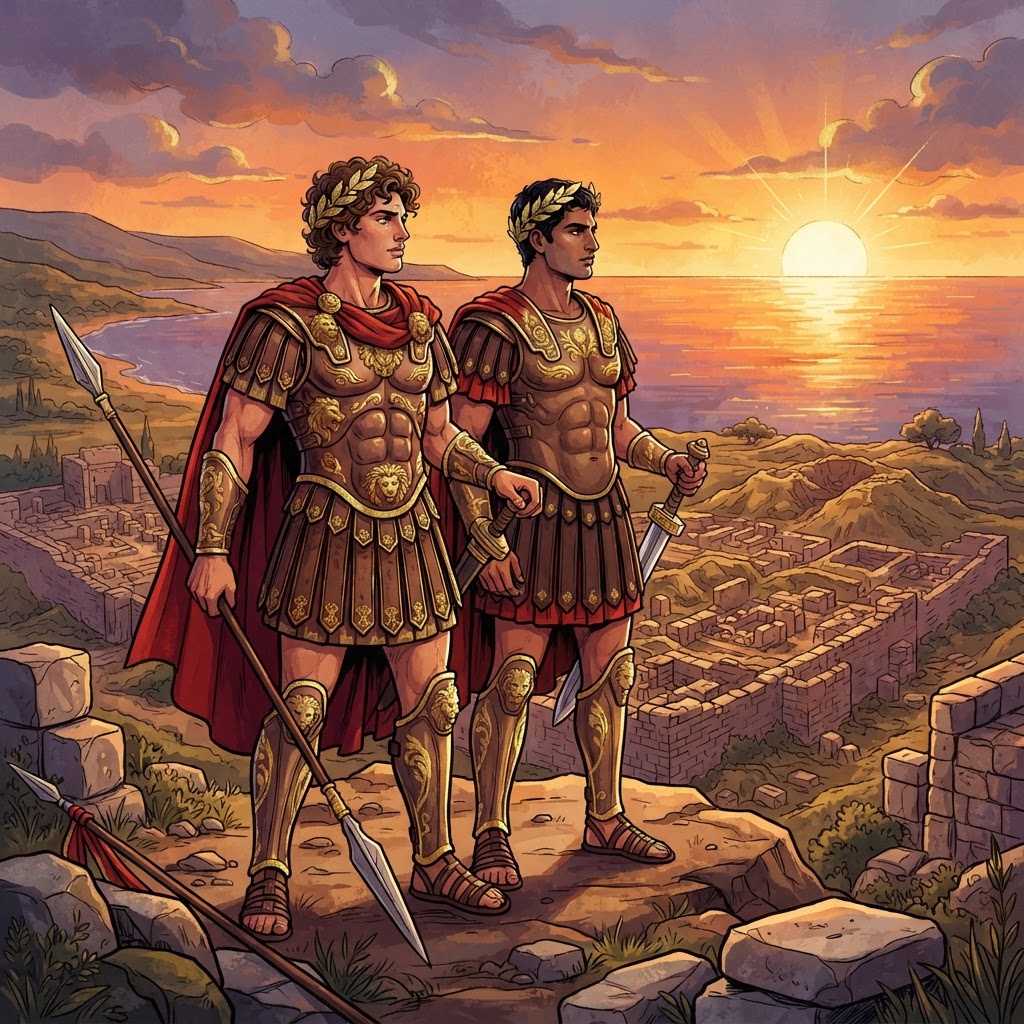
Let’s start 2,382 years ago. On July 20, 356 BC, Olympias of Epirus gave birth to a baby boy named Alexander in the ancient Macedonian capital of Pella. We know him today as Alexander the Great, the military genius who conquered the Persian Empire and died before his thirty-third birthday. But while historians love his phalanx formations, the queer community remembers him as a wildly dramatic bisexual icon who set an impossibly high bar for boyfriend appreciation.
Ancient Greece, of course, didn’t have our modern boxes for sexual identity. But even then, Alexander’s romantic life was legendary. His primary emotional anchor was Hephaestion, his lifelong companion, general, and lover. They grew up and conquered the known world side-by-side, even paying tribute at the tombs of Achilles and Patroclus together—the ancient world’s ultimate soft-launch of a relationship.
But the real drama unfolded when Hephaestion died of a sudden fever in 324 BC. Modern boyfriends might write a sad Instagram caption; Alexander went absolutely feral. He fell upon the corpse, weeping for an entire day, and refused to leave until his guards dragged him away. He then ordered his hair shorn, banned all music throughout his empire, and had the unfortunate physician who failed to cure Hephaestion crucified. If your partner doesn’t order a national period of mourning when you get food poisoning, does he even love you?
If Hephaestion was the great love of his life, Bagoas was his public victory lap. Bagoas was a beautiful Persian courtier who captured Alexander’s heart. During a dance competition in front of the entire Macedonian army, Bagoas won the crowd over. When the troops enthusiastically demanded that Alexander kiss the young dancer, Alexander didn’t hesitate. He pulled Bagoas onto his lap and gave him a massive, theatrical kiss right there in front of thousands of battle-hardened soldiers, who roared with approval. Conquering the world is great, but doing it while making out with your gorgeous Persian boyfriend in front of your troops? That is elite-tier gay energy.
1845 — Cruising, Cop-Dodging, and Chaos in the Tuileries Gardens
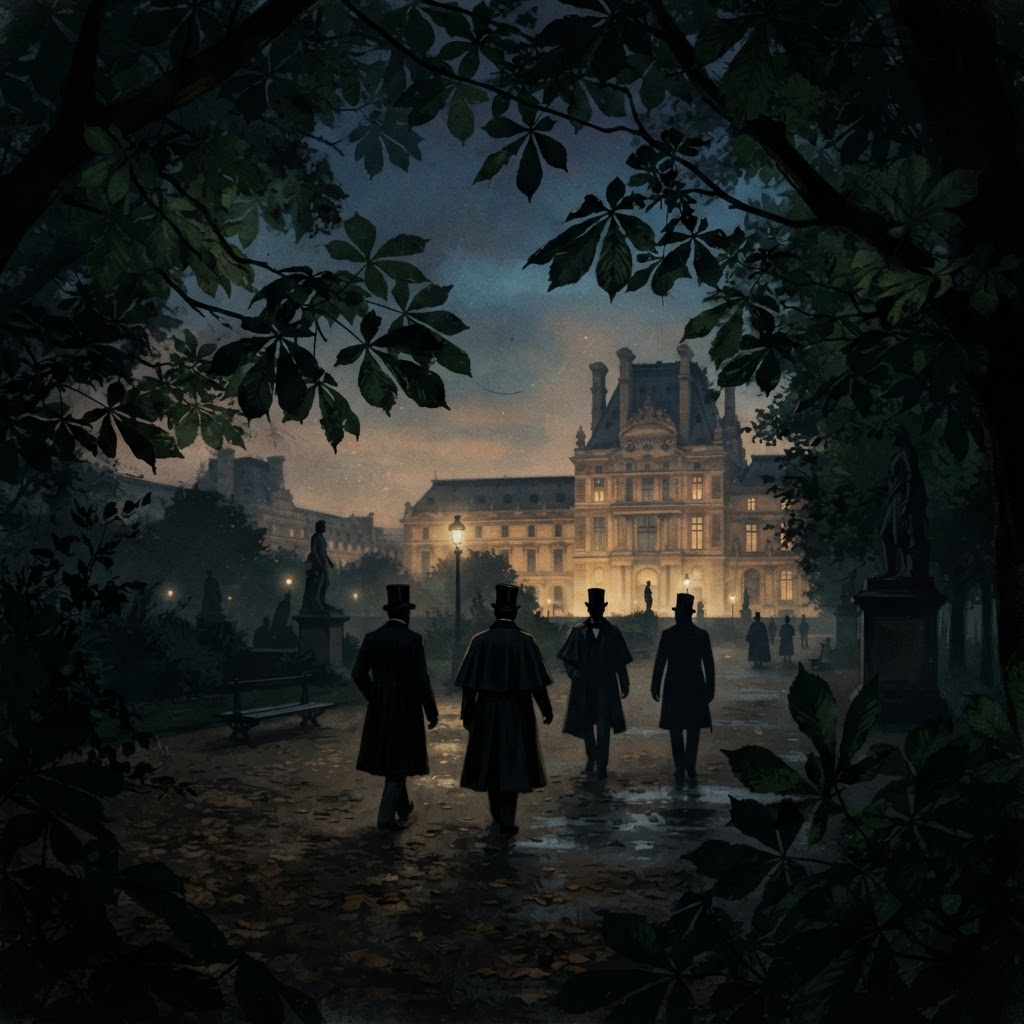
Fast-forward to July 20, 1845. The setting shifts to the refined lawns of Paris, France. Paris has a reputation as the city of love, but in the nineteenth century, it was also the undisputed global capital of cruising. And there was no hotter spot to see and be seen than the Tuileries Gardens, located right outside the Louvre.
France was technically ahead of the curve. The French Revolution decriminalized sodomy in 1791, but the police quickly realized they could still arrest gay men using vague laws against “offenses to public decency” (outrage public à la pudeur).
On July 20, 1845, the Parisian gendarmerie launched a massive sweep of the Tuileries Gardens, arresting about fifty men who were just trying to enjoy some outdoor socialization. As the police paraded these fifty men out of the gardens, a large, hostile local mob gathered and actively attacked the arrested men, hurling insults and physical violence at them as they were being carted off.
It is a sobering reminder of our history. Long before Fire Island or Grindr, our ancestors were negotiating public spaces, dodging police stings, and braving angry mobs just to find connection. There is a deep, resilient lineage in the simple act of reclaiming public space. And frankly, the next time you find yourself complaining about a bad connection on a dating app, just remember that in 1845, your Parisian counterparts had to dodge actual gendarmes and angry French peasants just to get a phone number.
1950 — Roberta Achtenberg is Born (And Promptly Ruins Jesse Helms’ Day)
On July 20, 1950, Roberta Achtenberg was born in Los Angeles, California. Decades later, she would become a civil rights attorney, a San Francisco Supervisor, and the ultimate boogeyman for right-wing politicians who couldn’t handle a competent, confident lesbian in public office.
In 1993, President Bill Clinton nominated Achtenberg to be Assistant Secretary at HUD. She was a brilliant lawyer with years of experience fighting housing discrimination, but to the conservative establishment of the early nineties, her nomination was treated like an impending alien invasion.
Senator Jesse Helms of North Carolina, whose brand was built on pure homophobia, was so traumatized by the idea of an openly gay federal appointee that he launched a spectacular crusade to block her. Helms took to the Senate floor and famously denounced her as “that damn lesbian” who would advance a “homosexual agenda.”
Despite Helms’ best efforts, Achtenberg kept her cool. She navigated the hostile, bad-faith Senate hearings with flawless grace, professional poise, and the kind of quiet confidence that makes bigots look incredibly foolish.
On May 24, 1993, she was confirmed by a 58-31 vote, making Roberta Achtenberg the first openly LGBTQ+ individual confirmed by the U.S. Senate for a federal cabinet-level position. She shattered a massive glass ceiling and proved we belong in the halls of power, all while making the country’s biggest bigots look ridiculous.

2005 — Canada Legalizes Same-Sex Marriage (And Flexes on the United States)
Finally, we arrive at July 20, 2005—exactly twenty-one years ago today. While the United States was still embroiled in exhausting culture wars over whether same-sex couples should be allowed to visit each other in the hospital, Canada decided to show the world how it’s done.
On this day, the Canadian Parliament passed Bill C-38, also known as the Civil Marriage Act, which became federal law. With a stroke of a pen, Canada became the fourth country in the entire world—and the first in the Americas—to legalize same-sex marriage nationwide.
In 2005, the U.S. was in a dark place queer-rights-wise, with President George W. Bush campaigning for a constitutional ban on same-sex marriage. Across the border, our polite, maple-syrup-loving neighbors were casually shrug-shouldering their way into the future.
What followed was a hilarious era of American gays booking frantic weekend road trips to Ontario and Quebec. We packed our bags, drove across the border, stood in beautiful Canadian city halls to exchange vows, ate poutine, and then returned home to a country that treated our marriage certificates like expired coupons. It was a beautiful, bittersweet chapter of our history.
Canada’s bold move proved that legalizing same-sex marriage wouldn’t cause society to slide into an apocalyptic abyss. The sky didn’t fall, and the only noticeable side effect was a massive boom in the Canadian wedding tourism industry. It took the United States another ten years to catch up with the Obergefell decision in 2015, proving once again that Canada is always just a little bit cooler and more sensible than its loud neighbor to the south.
The July 20 Takeaway: Conquering, Cruising, and Carving Our Own Paths
So, what is the invisible thread that connects a bisexual Macedonian emperor in 356 BC, a group of Parisian men dodging police sweeps in 1845, a glass-ceiling-shattering lesbian attorney in 1950, and a nationwide Canadian wedding party in 2005?
It is the constant, unrelenting, and beautifully stubborn search for space.
Whether we are conquering empires to live on our own terms, reclaiming public parks for connection, fighting for our rightful place in government, or demanding the legal right to say “I do,” queer history is a story of carving out space where society told us none existed. We have always been here—conquering, cruising, campaigning, and celebrating.
So on this Monday, July 20, 2026, as you slog through your emails, take a moment to raise a glass to the drama queens, the cruisers, the pioneers, and the Canadians who paved the way. They fought the cops, survived the mobs, made the bigoted senators cry, and threw the weddings so that you could sit here today, living your life in relative peace.
Happy July 20th, boys. Go make some history of your own.
Related reading
- This Day in Gay: July 27
- This Day in Gay: August 24, When Queer History Refused to Behave
- This Day in Gay: August 3 and the Queer Fight to Own the Story